|
HOME . HIGHLIGHTS Victoria Falls The Zambezi River Lake Kariba Lake Tanganyika More... GAME PARKS South Luangwa North Luangwa Lower Zambezi Kafue Lochinvar Sioma Ngwezi Kasanka More ....
SAFARIS Walking Safaris Birding Safaris Canoeing Safaris Mobile Safaris Elephant Back Safaris Horse Back Safaris Photographic Safaris Open Vehicle Safaris ADVENTURE /SPORT White Water Rafting Bungi Jumping River Boarding Tandem Kayaking Abseiling Gorge Swinging House Boating Tiger and Fly Fishing Lion Walks Cheetah Walks Elephant back Trails Driving around CITIES & TOWNS Lusaka Livingstone The Copperbelt More DIRECTORY Accommodation Adventures Embassies Golf Courses Govt Offices Private Reserves Restaurants-Lusaka Safari Operators Transportation Tours Travel Agents TRAVEL INFO Quick Facts Getting There Getting Around Handy Information Visa Info WILDLIFE Illustrated Checklists BIRDLIFE In depth synopsis Checklists PEOPLE History Culture Major Tribes Ceremonies ENVIRONMENT Geography Vegetation Conservation MAPS PHOTO GALLERIES VIDEOS TOUR & SAFARI Co's LINKS ENQUIRIES ADVERTISING
|
OTHER
TOWNS
IN ZAMBIA
Chipata
Chipata
used to be known as Fort Jameson back when Zambia was
still Northern Rhodesia and was an important trading post
in the early part of the century. Now it is a bustling
town where you can buy almost anything. Colourful markets
selling fruit, vegetables, chitenje cloths, second hand
clothing and little trinkets. There is a large Indian
community here and their presence is evident in the
number of ornate and colourful mosques around the town.
It is also the gateway to Malawi and many Zambians cross
the border regularly to do shopping trips in Lilongwe
only an hour and a half away. Its also the Gateway to the
Luangwa Valley. There are a few motels
to stay at here that are basic but clean. (see
Directory.) There is also a Campsite
run by the Wildlife Conservation Society. Look for the
blue and white sign on the main road.
Mamarulas is a cosy
Guesthouse and Campsite on the road to Mfuwe.
The
Ngoni Tribe lives in
this area
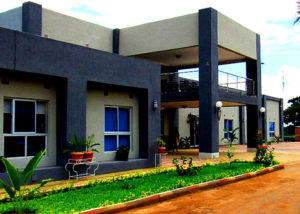
Protea Hotel Chipata is located on the outskirts of Chipata town, three
hours drive from South Luangwa National Park and only 130km to the
capital city of Malawi; Lilongwe.
Choma
In the
Southern
Province, halfway between Luska
and Livingstone. There is an excellent museum in Choma called the
Choma Museum and Crafts Centre Trust and it has played a major
role in the development of rural crafts in Zambia. Try Masaku Lodge or
Mambashi Chalets for tranquil overnight stops along this
main rd between the two major towns of Zambia.
Isoka
A small
town just off the
Great North Road towards the border at
Nakonde. It has a district hospital, post office and a
few shops. It does have a run down motel but its probably
better to camp at the police station. Six kilometres from
Isoka one can find a set of waterfalls in a series of 3
falls, there is a place to camp but no facilities. The
area is very isolated and one can swim in the pools below
the second falls. The first is about 15m high, the
second, about 30m.
Kabwe
map
The town of Kabwe is where Zambia's
most famous prehistoric Broken Hill man was found in the 1920s.
Broken HIll was Kabwe's previous name.
The
Kabwe skull (often known as ‘Broken Hill Man’ after the name of
a nearby town) is older than the (38 000yr) claim, at 125,000 to
300,000 years old, and it was found on 17 June 1921 by a Swiss
miner, Tom Zwiglaar, in a limestone cave. It was the first early
human fossil to be found in Africa and was sent to Arthur Smith
Woodward (1864- 1944),
who gave it the new species name Homo rhodesiensis
(Rhodesian Man).
More recent
anthropologists have preferred to see it as a primitive form of
Homo sapiens, but are undecided on the precise species.
It may be related to Homo heidelbergensis, the ancestor
of the predominantly European Neanderthals (there were never any
Neanderthals in Africa) or it may indeed be a separate species,
Homo rhodesiensis, as Arthur Smith Woodward originally
proposed, which would be our direct ancestor.
http://www.kmatthews.org.uk/cult_archaeology/out_of_place_artefacts_7.html

Kabwe is a two-hour drive from the capital, Lusaka. Kabwe was
previously known as Broken Hill and was named by an Australian
mining prospector who lived in the town. Other places of
interest include.
-
The Big Tree (in town) -
where early settlers used to congregate and relax
-
Bwacha Political monument
-
-
-
Mulungushi power station -
the first hydro power in Zambia and central Africa and
was commissioned by King George
Kapiri
Mposhi
A small
railway town at the junction of the road to the
Copperbelt that to the North Eastern part of the country along the
Great North Road.
There is a market along the main road, fuel station, a
motel and a few shops. But otherwise, not much to stay
for. Petrol gets more expensive from here on so it's a
good place to fill up. This is where the Tanzania Zambia
Railway line (Tazara) begins, going all the way up to Dar
es Salaam.
Kasama
Kasama is a
fairly big town on the
Great North Road. It has fuel,
various banks, a hospital, post office and police
station. There is a large airport that is on the domestic
flight schedule. Avgas is available here from BP. The
best accommodation is at the
Thorntree Guest House. (See
Guest Houses)The rooms are all en suite and some have
TVs. There is a pleasant restaurant and a bar. The
train station is on the Tazara Railway line to Tanzania.
Kazembe
A small
town on the Mansa / Nchelenge road, which incidentally is
one of the better roads in the whole of Zambia. There are a
few shops and fuel stations but no accomodation. Kazembe
mostly known for the splendid Umotomboko Ceremony
held in late July every year. (See
People)
The two day
ceremony is a grand affair, mixed with ritual,
semi-mystic performance, pounding drum beats and long
speeches. Tributes of beer and food are brought to the
chief by the women. The chief, smeared with white powder,
then goes to pay homage to his ancestral spirits and is
carried back to his palace to the beating of drums. The
unusual attire of the chiefs and senior council -
brightly coloured cotton skirts (in memory of an early
king who received gifts of cloth from Portuguese
ambassadors) worn with western suit jackets, attest to
the way ancient tribal traditions are changing and
blending with contemporary times.

Luanshya
A
small town on the Copperbelt.
For accommodation try
Cholwa Guesthouse
Mansa
The town of
Mansa emerged as the centre of Luapula province in the
1960s. It is just across from the Copperbelt though
the Zaire peninsula that juts into Zambia. One can get a
fairly wide range of supplies, fuel and services here.
The Mansa Hotel has very spacious comfortable rooms
as well as a restaurant and Bar.
Mbala
Before
independence Mbala was known as Abercorn and played an
important role during the First World War in the then
Northern Rhodesia. It was strategically important due to
its proximity to the German East Africa border (now
Tanzania) and was also the place where German forces
surrendered their control of East Africa. Today it a
small quiet town with a few shops and businesses.

If
youre passing through on the
Great North Road
between Kasama and Mpulungu, dont miss the
Moto
Moto Museum. It is situated 4kms beyond Mbala and
holds an impressive and well-displayed range of cultural
artefacts from the tribes of the Northern Province. There
are archaeological finds and historical displays on the
earliest explorations carried out in this region of
Africa. The museum also houses an impressive display of
artefacts from the First World War in Northern Rhodesia
where the Germans finally surrendered in 1918, the
struggle for independence. The museum also promotes
Zambian culture through their dance troupe which performs
every Sunday at the Cultural Arena, just 50 m from the
museum, except during the rainy season between December
and April. Nearby is Lake Chila, a small lake
which has a golf course on its banks. The Germans, after
their surrender in the First World War were ordered to
dispose of their weapons in the lake, many of which have
been retrieved and are on display at the Moto Moto
Museum. The Grasshopper Inn offers clean but basic
accommodation for reasonable rates.
Mkushi
Mkushi is
small farming town just off the
Great North Road
with a few
shops, petrol station a post office, hospital and police
station. A good overnight stop is the
Forest
Inn,
about 30kms before the Mkushi Turn off. There are
several quaint little en-suite chalets and a shady
campsite with good facilities.
Sweetwater
Guesthouse is just near the Mkushi River Bridge.
Mongu
Located on high ground overlooking the
Zambezi River floodplain, Mongu is the bustling capital of the western
province. It is also the center of the Barotseland, the Kingdom of the
famous Lozi people. Traditional culture is alive here and the Lozi
King, the Litunga, has his winter palace (dry season) at Lealui, 15 km
northwest of Mongu, and his summer palace (wet season) at Limulunga 15
km north of town.
Also at Limulunga is the Nayuma Museum
open from 08 hrs to 17 hrs Monday to Friday, full of exhibits on the
Lozi Culture and their annual Kuomboka
traditional ceremony - the Litunga's boat Journey from the wet
palace to the dry palace in advance of the seasonal flood waters.
While in Mongu, don't miss the Mumwa Crafts Association gallery of
traditional Lozi wood and leather crafts, baskets, ceramics and
furniture

Mpika
Mpika is
one of the bigger towns in the Northern Province on the
Great North Road
and one
can get basic supplies here. There is a post office, a
very good hospital and fuel. There is also an office of
the Department of National Parks and Wildlife Services.
The North Luangwa Conservation Project has its head
quarters here as does the Tazara Zambia railway line.The Crested
Crane Hotel has adequate accommodation and there
is a small resthouse for overnight stops. About 100 kms north Mpika is
the grand Shiwa Ngandu Estate
and Kapishya Hot Springs.
Also near Mpike is Mutinondo Wilderness Camp. (See
Directory)
Nchelenge,
Kashikishi
The good
tar road from Samfya will take you all the way to
Nchelenge and Kashikishi via Mansa. These two little
villages on Lake Mweru, show a quaint side of village
life. Colourful markets selling local needs, second hand
clothing and vegetables. Unfortunately the shoreline is
lined with huts and access to the Lake is tricky unless
you go further north to places where the population thins
out. The Lake is essentially a source of fish and thus
the livelihood of most villagers. There is a post office,
clinic, hospital and fuel.
There is a good resthouse in
Nchelenge offering large en-suite rooms and fairly good
food at reasonable prices. Called the Lake Mweru Water
Transport Guesthouse, it also arranges boat trips to
the islands. In Kashikishi there are two guesthouses with
clean, if somewhat colourful rooms, and very reasonably
priced.Carry on along the tar road from Mansa and take
the left turn towards Kazembe. From there it is 45kms to
Nchelenge. Kashikishi is a few kilometres further down
the road.This is definitely one of Zambias finest
roads, all the way from Serenje, through to Samfya, Mansa
and beyond - no potholes and very little traffic. The tar
runs out just after Kashikishi. Take a boat from Lake
Mweru Water Transport in Nchelenge to one of the
islands. One can fish or explore the islands. Fishing
rods and tackle are not provided, so bring your own.
Serenje
A brief
little town about 191kms from Kapiri Mposhi on the
Great North Road.
It has a good service station with toilets, a small shop
and a few motor accessories.
There is a wonderful restaurant/guest house in Serenje that deserves
mention. They
have very charming rooms in their guest house and great service.
Siavonga
MAP
Situated on the north shore of
Lake Kariba,
Siavonga is the second largest tourist destination in Southern
Province. The town is only two and half hours (on good tar roads)
from
the Capital City Lusaka, and within easy reach of the border
crossings at Chirundu and Kariba. There are two Service Stations
(BP on the border road and Caltex in town), a Post Office, Bank,
local Hospital, and several small shops (including a bakery) where
basic provisions can be found.
A
visit to Siavonga must include a visit to the magnificent Kariba
Dam Wall, towering 118 metres above the Zambezi River, across
the Kariba Gorge. At the time of construction, the Kariba Dam was
known as one of the engineering wonders of the world. Given
sufficient advance notice, visits to the Power Station deep inside
the hillside at the Dam Wall can be arranged. In addition, a visit
to a working crocodile farm can be arranged as well as
boating and fishing activities and canoe safaris down the mighty
Zambezi River.
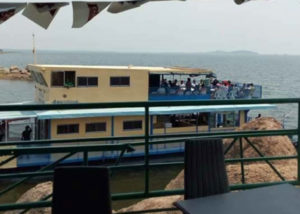
There
are several hotels in the town.
Eagles
Rest is a small family resort specifically focusing
tourism and lake activities. There are 12 comfortable Chalets
situated on the Lake shore each with air-conditioning, fully
mosquito proofed double or twin beds, en-suite bathroom and bar
fridge. The resort has full restaurant facilities offering
breakfast, lunch and dinner, a swimming pool and beach bar.
Self Catering is allowed but the resort does not provide cooking or
eating utensils (with the exception of a small braai fire which can
be provided on request). Eagles Rest has the only camp-site in the
town situated in a secluded wooded area with male and female toilets
and shower facilities. Boating and fishing can be arranged and
Eagles Rest is also the home of the
Houseboat Bateleur.
Other
hotels in Siavonga focus mainly on the Conference market and
include, Lake Kariba Inns,
Lake Safari Lodge, Manchinchi Bay Hotel,
Leisure
Bay Hotel, Zefa Lodges and Sandy Beach
Hotel. In addition, there are a number of small Guesthouses
available.
|
|