
Lions have been reintroduced to Lolelunga Private Reserve, marking their return to the area for the first time in about 15 years. In April 2026, two previously captive lions were released, the first time this operation has ever been undertaken in Zambia. In co-operation with the Departments of National Parks and Wildlife and Tourism, a male and a female (named R7A and R7) that were once held at a commercial venture near Livingstone are now being slowly sensitised to Lolelunga’s ecosystem in the hope that they will thrive.
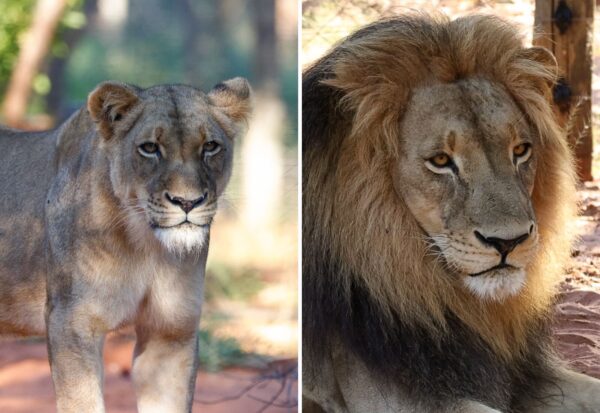
R7A and R7 have a new home in Lolelunga.
The 7-year-old pair are first housed in a secure area 10 times the size of their previous space to encourage bonding, which will increase their chances of survival in the wild. The next part of the process involves ‘scavenging trials’ in which carcasses will be left in their territory to stimulate their natural opportunistic scavenging traits (lions routinely steal kills from hyenas and leopards). The aim is to reinforce the notion that food comes from their surroundings, not from human keepers.
Once the team of a wildlife vet, lion-rewilding specialist and on-site management are satisfied with their hunting progress, the lions will be monitored at a distance using GPS tracking collars that will record their movements. Stationery lions are often eating kills so the team will be able to understand if they are hunting suitable prey successfully. The team will also keep their distance to ensure the pair start developing a natural aversion to humans after being surrounded by them for so many years.
The male and female were chosen to ensure they do not share a genetic overlap with the lions in Kafue National Park and the surrounding GMAs (game management areas). If breeding does ever occur, a new genetic bloodline will benefit the offspring.
Lolelunga’s reintroduced cheetahs produced three cubs earlier in 2026 – you can read more here.

Leave A Comment