
Three male African wild dogs from Kafue National Park have completed the longest recorded mammal movement on the African continent, travelling 4 126 kilometres / 2 564 miles over nine months in search of new territory and mates. The litter mates, known as the Mayukuyuku males, departed their birth pack in mid-2025, moving east and north through heavily built-up urban areas near Kitwe and Ndola in the Copperbelt before heading toward the Luangwa River Valley, ultimately settling in a game management area between South Luangwa and Lower Zambezi National Parks by April 2026. The findings, which also represent the longest recorded wild dog dispersal globally, have been published by the Zambian Carnivore Programme.
The previous longest recorded journey was in 2021 when three sisters left their pack in South Luangwa and travelled for more than 2 300km / 1 429mi. They survived on the move for 11 months, crossing an international border and moving through rugged terrain, farmland and settlements. Tragically, their journey eventually ended when they were killed by a poaching snare.
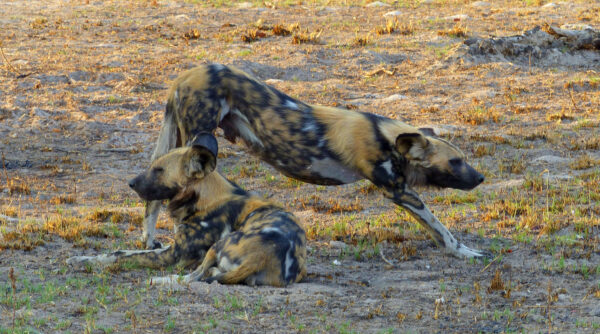
The tracking data revealed that when wild dogs move outside protected areas, they tend to travel quickly and in straight lines, making very few sharp turns. This is a recognised behaviour, almost identical to the way wild dogs move after encountering their dominant predator, lions.
In other words, survival behaviours that evolved to help wild dogs escape natural threats may now also help them navigate landscapes dominated by humans. These journeys are extremely dangerous. Wild dogs must contend with lions, crocodiles and other packs, alongside human threats including vehicle collisions, disease, livestock conflict and wire snares. Up to half of dispersing dogs may not survive naturally and now with increasing human impacts that number is much higher; half of the long-distance movements tracked in this study ended with a dog dying in a wire snare.
But those tragedies there is hope as these movements show that connections between distant wild dog populations still exist. Rather than being completely isolated within individual protected areas, wild dogs are moving between ecosystems, and sometimes across entire countries and international borders.
Protecting the places where wild dog populations thrive remains essential but the ZCP’s research also highlights the importance of maintaining the landscapes between those strongholds, reducing threats such as wire snares, supporting coexistence between people and wildlife, and working across national borders.
Wild dogs are showing us that large-scale connectivity is still possible. They are already crossing borders, navigating human-dominated landscapes and linking distant ecosystems.
Conservationists’ and researchers’ job is to give them the best possible chance of making it through.
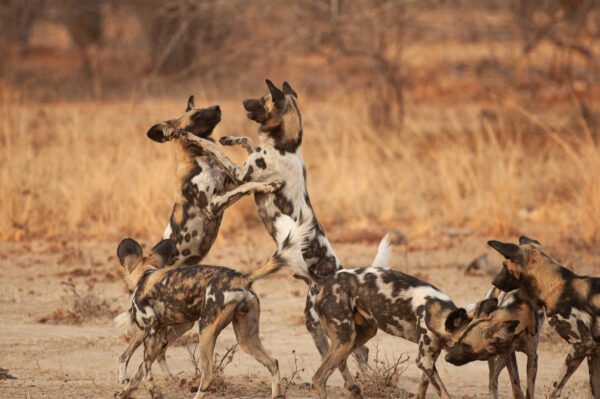
How the Study was Conducted
According to Shreya Dasgupta of Monga Bay, ‘The Mayukuyuku males were among 19 wild dog groups the team tracked using GPS collars fitted to individuals. Some journeys ended in tragedy.
‘A female wild dog, nicknamed EWD-1355, set off with her two sisters from a pack in South Luangwa in 2021. After travelling more than 2 300km (1 400mi), including through Mozambique, EWD-1355 was killed in a hunter’s snare set in a GMA in southern Zambia to catch animals like antelope for meat.
‘It’s unclear what happened to her sisters, but snares are often laid in sets, explains study co-author Matt Becker, chief executive of the ZCP. Dogs are reluctant to leave injured pack mates, and several can be trapped and killed in a single event, he added.
‘All 19 tracked groups moved within or around seven national parks in Zambia. Four groups separately reached within a few kilometres of neighbouring Angola, the Democratic Republic of Congo, Malawi and Zimbabwe.
‘Researchers previously have recorded similar wild dog migrations in Botswana, Tanzania, and Zimbabwe, suggesting most wild dog populations in Southern and Eastern Africa remain connected.
‘With much of the landscapes where wild dogs live and disperse changing, Becker called for improved conservation models, such as ones that provide economic benefits through nature-based tourism or that produce meat sustainably and legally through game ranching.
“We don’t need to separate people from nature,” he said. “We can have these large landscapes, large, connected areas, beneficial to both.”’
CREDIT ATTA (African Travel & Tourism Association) and Shreya Dasgupta of Monga Bay
PHOTO CREDITS Shenton Safaris (Mwamba Camp and Kaingo Camp) and Everwild Travel (Nanzhila Plains Camp)

Leave A Comment