WILD DOGS
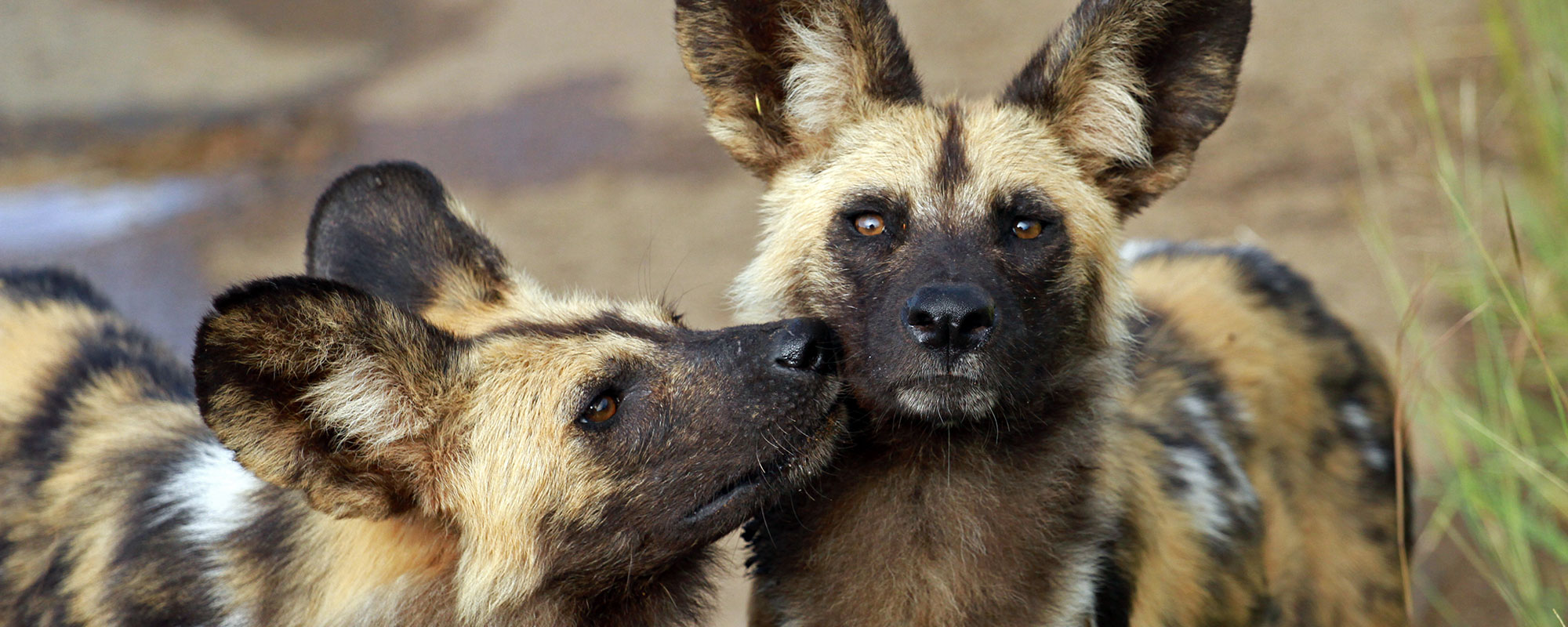
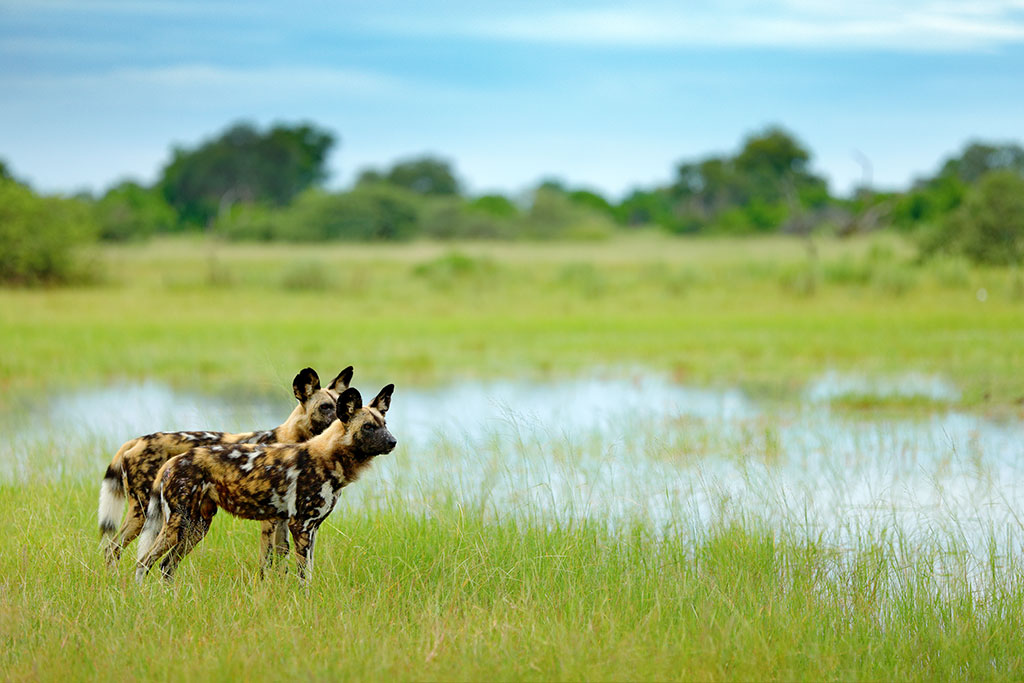
Also called painted dogs, this species is considered endangered in Africa, despite having large litters of up to a dozen. They were actively and deliberately exterminated as they moved into inhabited areas and anthrax has also been responsible for their decline in numbers. Packs of wild dogs wander continuously, never staying long in one place.
The wild dog has undergone a dramatic recent decline in population to the stage that few countries now support viable populations. Zambia is considered one of six strongholds for the remaining packs and conservation work is slowly increasing their numbers. The Luangwa Valley is thought to have the largest number in Africa.
Living in groups of 10 to 20 individuals, they are efficient hunters using the open plains or savannah and depending on their excellent eyesight and stamina to run down their prey. They usually take the smaller antelope like impala but bigger packs have been known to take animals as large as kudu or waterbuck.
The pack has a communal breeding burrow and co-operate in bringing food that they regurgitate for the young who first go through a begging ritual. There is often a preponderance of male pups in a litter. They live for 10 to 12 years in the wild. Wild dogs live in socially complex packs composed of several related adult males and one or more related adult females originating from another pack. Often only the dominant bitch will rear pups successfully.
Directed hunting by humans is the leading cause of decline. Wild dogs are undeservedly perceived as killers of livestock. Disease – including canine distemper and rabies – have decimated many populations.
African wild dogs use their sense of sight, not smell, to find their prey. They pay no attention to wind direction and they do not use cover when approaching their prey. They can run up to 55kmh / 34mih for longish distances, staying in touch with complex squeaks and vocalisations while cornering their prey.
They will attack the babies of zebra and warthog and the young of large antelope such as wildebeest. Wild dogs, unlike leopards, eat immediately because lions, hyenas and even jackals will scent the fresh blood and try to steal the kill. They then move off and return to their den to feed the puppies.