WARTHOGS
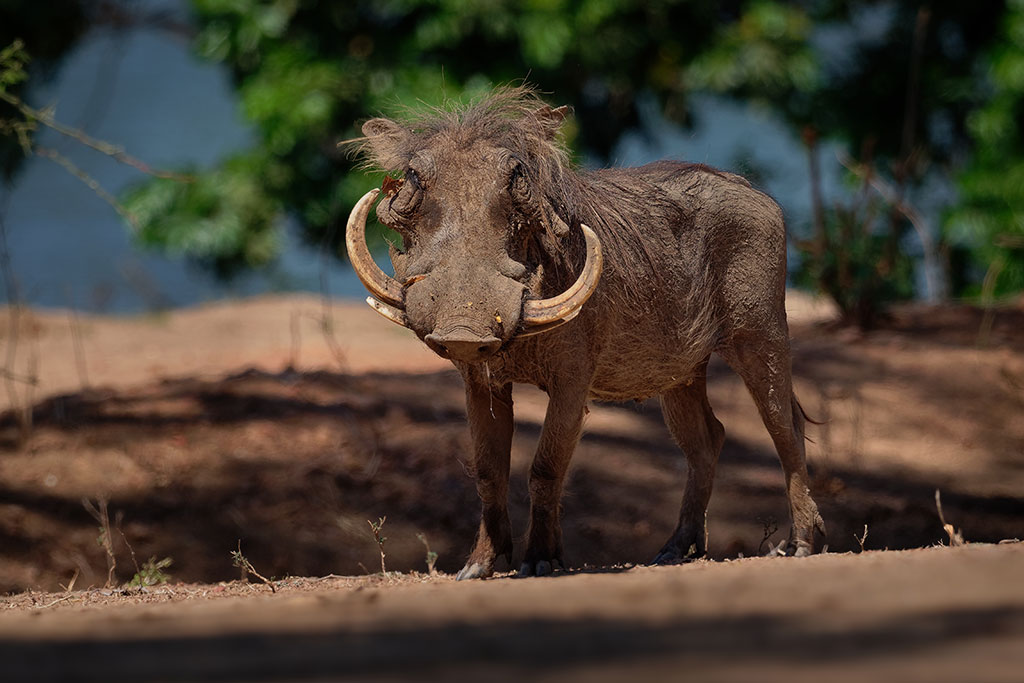
Common in the bigger national parks, warthogs are usually seen in family groups or pairs. They feed on roots and grasses throughout the day and can often be seen on their front knees digging with the snout (not the tusks) to get at the roots of grasses and sedges. They farrow from June to October and have litters of about 3 to 5 piglets. They are named for the four large protrusions from the sides of the head, not warts at all, but apparently fat reserves, and used in fighting and defence. Warthogs live in holes in the ground where the young stay until they’re big enough to walk with their parents in the open.
Males weigh up to 22kg / 50lb more than females but both are distinguished by disproportionately large heads and the facial ‘warts’ or thick protective pads. Two large pairs occur below the eyes and, usually only in males, a smaller pair nearer the jaw.
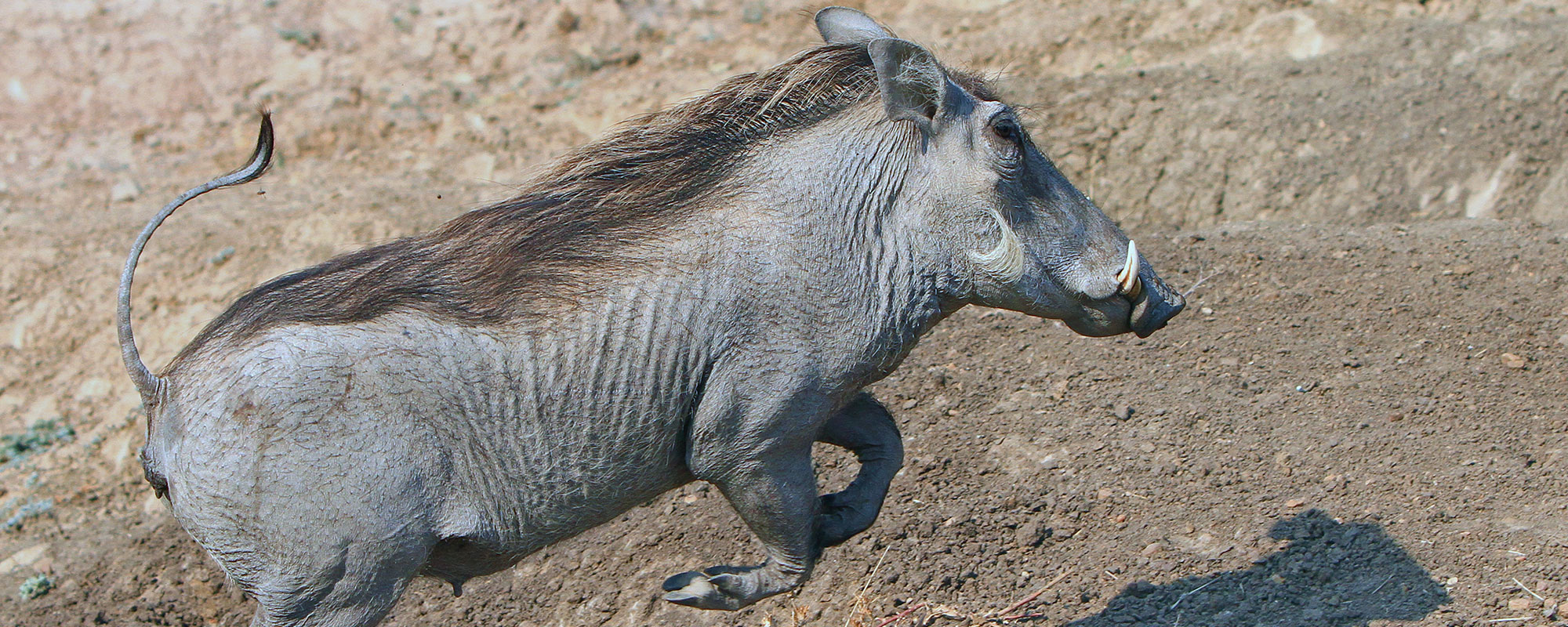
Sparse bristles cover the warthog’s body, although longer bristles form a mane from the top of the head down the spine to the middle of the back. Warthogs are grey or black (or yellowish or reddish, if it has been wallowing in mud). The long tail ends with a tuft of bristles.
Warthogs characteristically carry their tails upright when they run, the tuft waving like a tiny flag. As the young run in single file, the tail position may serve as a signal to keep them all together.
Warthogs trot with a springy gait but they are known to run surprisingly fast. They can escape a lion’s burst at 55 kmph / 35mph!