
RODENTS OF ZAMBIA
SQUIRRELS
Three types of squirrel occur in Zambia: the ubiquitous bush squirrel found throughout the savannah woodland areas, Boehm’s squirrel and the sun squirrel, which is the largest.
AARDVARK
Otherwise known as the antbear, this unusual animal is found in various habitats but is a very rare sight due to its secretive nocturnal habits. It has long ears, a blunt tubular snout and a long prehensile tongue that it uses to gather up termites and other insects. It uses its strong claws to burrow holes in the ground where it sleeps during the day.
The aardvark has a short neck connected to a massive, dull brownish-grey almost hairless body that has a strongly arched back. The legs are short with the hind legs longer than the front ones. The head is elongated and ends in a long, narrow snout, with nostrils that can be closed. The long, tubular ears are normally held upright but can be folded and closed.
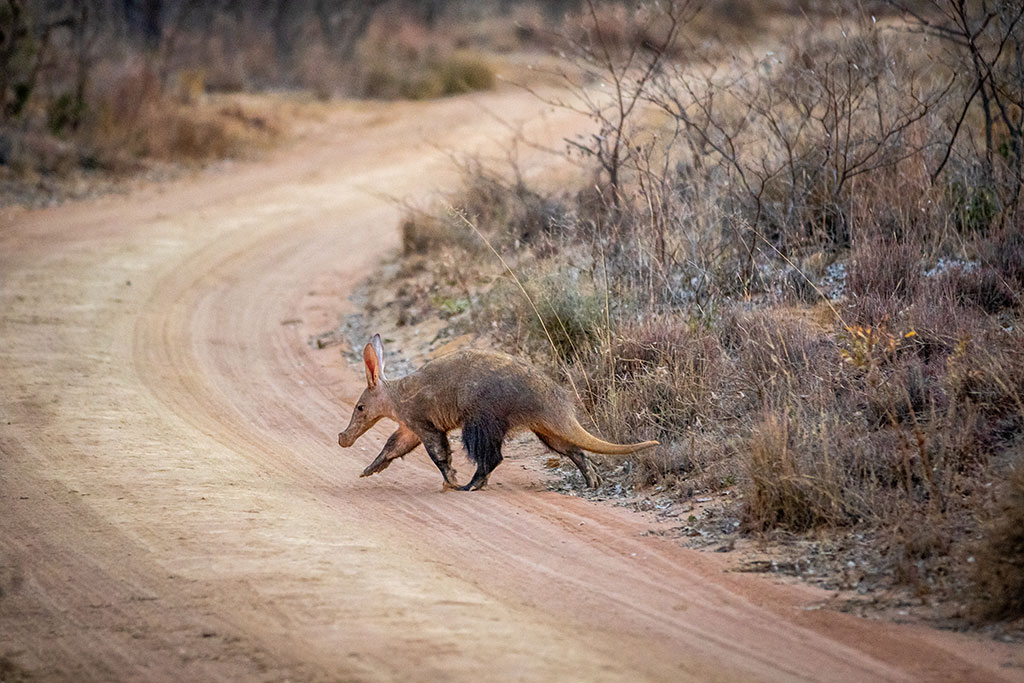
The short but muscular tail is cone-shaped and tapers to a point. The thick claws on the forefeet are used as digging tools.
As it is nocturnal and has poor eyesight, the aardvark is cautious upon leaving its burrow. It comes to the entrance and stands there motionless for several minutes. Then it suddenly leaps out in powerful jumps. At about 10 metres / 30 feet out it stops, raises up on its legs, perks up its ears and turns its head in all directions. If there are no sounds, it makes a few more leaps and finally moves at a slow trot to look for food.
The adult aardvark’s principal enemies are humans (who sometimes kill it for bushmeat), lions, hyenas and leopards; pythons also take the young. When in danger the aardvark takes to the nearest hole or rapidly excavates one, pushing the dirt backwards with its feet and moving it away with its tail. But if cornered, it defends itself by sitting up, using its tail, shoulders and foreclaws or it will lie on its back and strike with all four feet.
HARES
The spring hare is a kangaroo-like rodent, with long and powerful hind legs and a long bushy tail. They are found in areas of light sandy soil usually on open ground but occasionally in light woodland. It hides during the day in burrows. They are solitary, terrestrial and strictly nocturnal. The scrub hare is somewhat larger and frequently seen at night in the road but prefers dry open country and light woodland where it grazes only various grass types. It gives birth to very well-developed young who are able to fend for themselves soon after birth. For this reason they do not burrow holes in the ground as do rabbits.
HYRAX
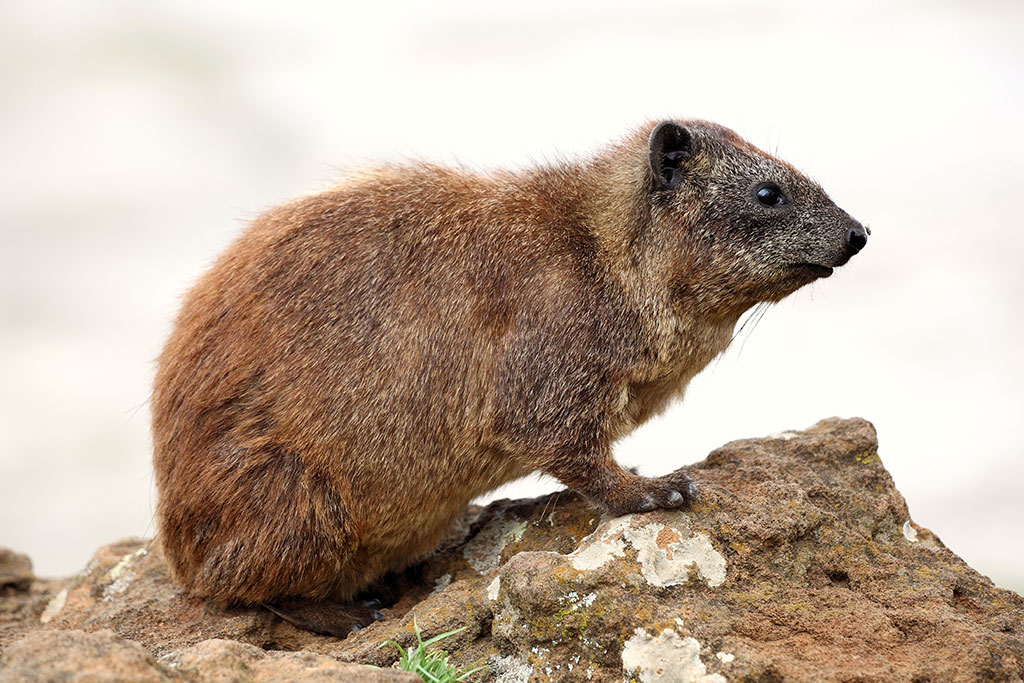
Also known as a dassie or ‘rock rabbit’ as they favour rocky outcrops. Two types of dassie occur in Zambia, the tree dassie and the yellow spotted dassie, although they are almost impossible to distinguish.
The latter is more terrestrial than arboreal but both feed on various plants, fruit and lichen growing on the rocks.
PANGOLINS
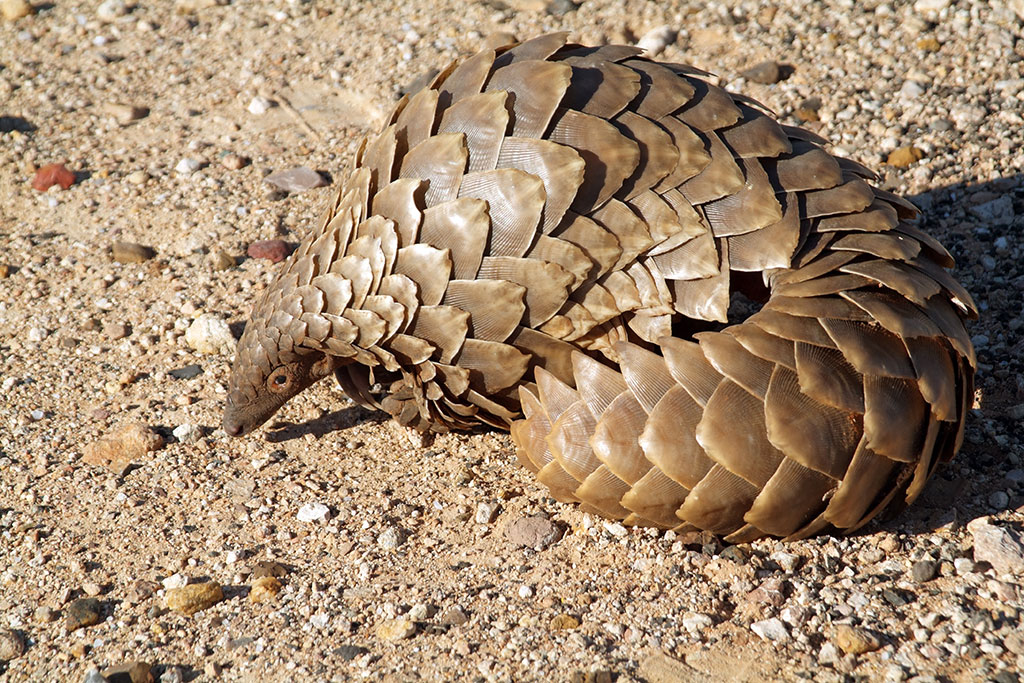
This reptile-like animal with large overlapping scales has only been spotted in the Kafue National Park, in dry woodland or scrub terrain.
It also has a long sticky tongue which it uses to gather termites and ants. When attacked or alarmed it rolls itself into an impenetrable ball. Pangolins are under imminent threat of extinction because they are likely the world’s most widely trafficked animal, taken for use in the Far East.
They are shy and lack defences against humans, making them easy targets for poachers and traffickers.
PORCUPINES
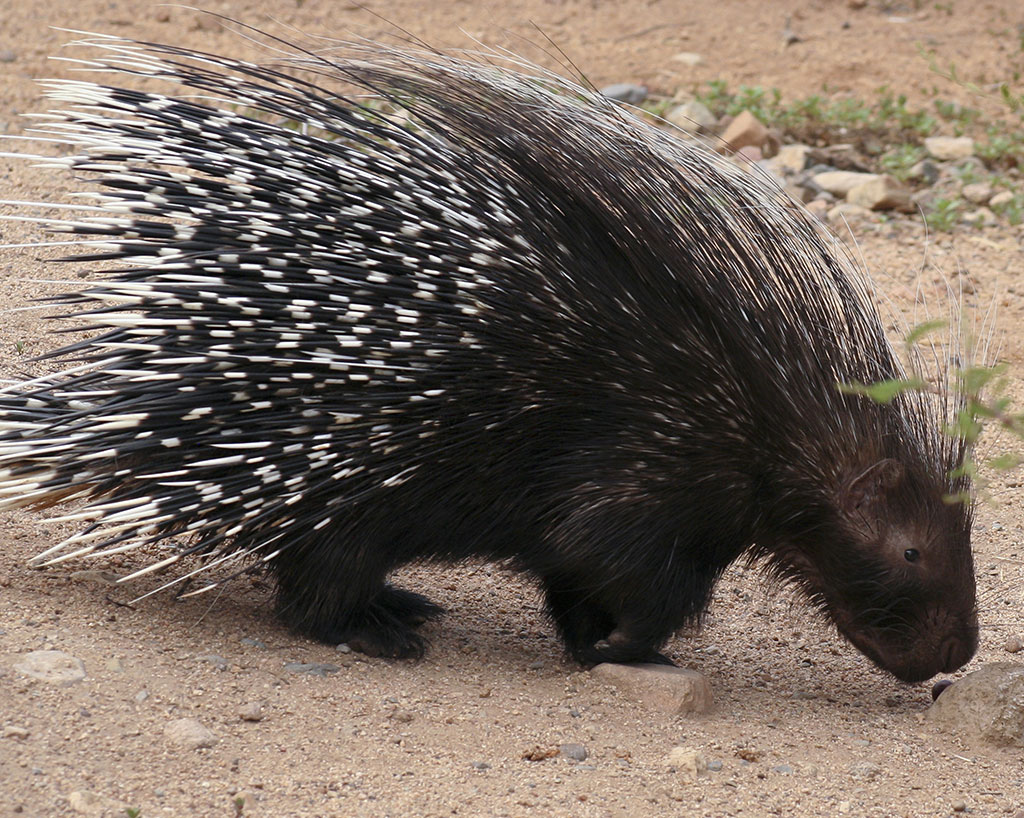
With its long sharply pointed quills erected when they are alarmed, the porcupine is formidable prey for carnivores. They are mainly vegetarian and are usually spotted alone at night foraging along the ground.
Natural shelters such as caves or crevices among roots and rocks are modified by porcupines to suit their needs. They will inhabit holes made by other animals but also dig their own. When these burrows have been occupied over several years, they will have several passages, entrances and exits.
As do most well-armed or poisonous animals, the porcupine warns potential enemies of its defence system. When alarmed it will stamp its feet, click its teeth and growl or hiss while vibrating specialised quills that produce a characteristic rattle.
The ‘rattle quills’ on the end of the tail are hollow and open at the end so they produce the most noise. If an enemy persists, the porcupine runs backward until it rams its attacker. The reverse charge is most effective because the hindquarters are the most heavily armed and the quills are directed to the rear.
The porcupine is capable of putting on a very aggressive display but it is basically timid. It is occasionally the target of predators such as pythons and leopards, sometimes to the detriment of the predator, which can die from quill wounds. Predators have been found dead with a porcupine lodged in their throat. Large owls also prey on young porcupines.