
REPTILES OF ZAMBIA
CROCODILES
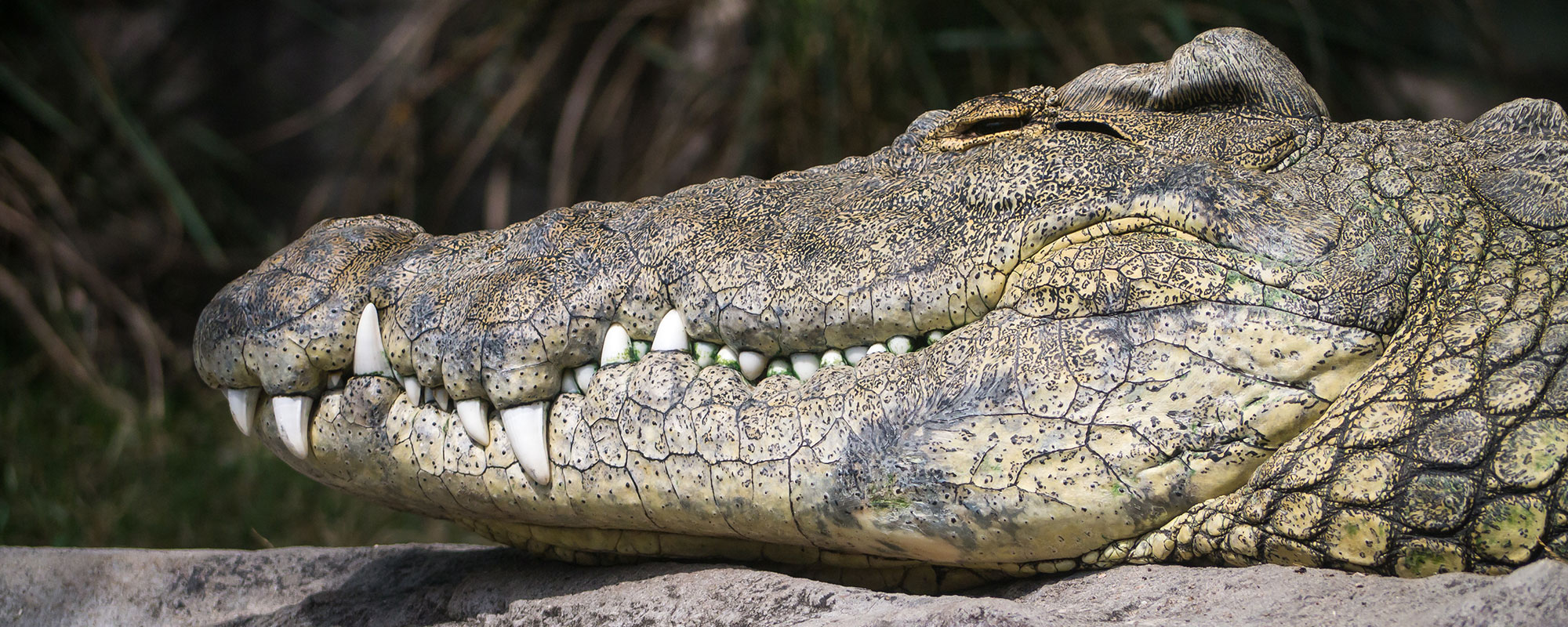
Very prolific along most of Zambia’s rivers, lakes and dams, the crocodile is probably the only reptile that shows any maternal instinct. In September, when the water is low, the female will dig a hole and deposit between 45 and 90 eggs, perfectly timed to hatch before the river rises and floods the nest site three months later. She will guard the nest site against predators such as monitor lizards, honey badgers and even hyenas. After three months the young emit a soft squeaking sound from the eggs. She then removes the topsoil that they would be unable to penetrate without her help.
The unborn young have a bony tip on their snouts to help them cut through the tough shell, which soon after birth is absorbed and disappears. As they break through the shell she collects them in her mouth and carries them to water. Even though she continues to care for them for several weeks after hatching, only one percent are likely to reach maturity as they are snatched up by African fish eagles and other predators. Small crocs feed on insects and other invertebrates, medium crocs on fish (mostly barbel or catfish) and only the larger ones take mammals coming down to the rivers to drink, often as big as a buffalo. They will readily attack a person in the water and many local fishermen have fallen prey to their jaws. The slender snouted crocodile, Crocodilus cataphractus, occurs sparsely in the Luapula / Bangweulu area.
Crocodiles are sometimes nicknamed ‘flatdogs’ or ‘flatties’. They can remain motionless on land for long periods, suddenly scurrying the water without warning.
MONITOR LIZARDS
Common around rivers and lagoons, these enormous lizards can grow up to a length of almost two metres / 6.5 feet. They are sometimes spotted on overhanging or partly submerged trees along riverbanks. They live in holes in the ground and forage on crabs and insects but often raid birds’ and crocodiles’ nests.
CHAMELEONS AND GECKOS
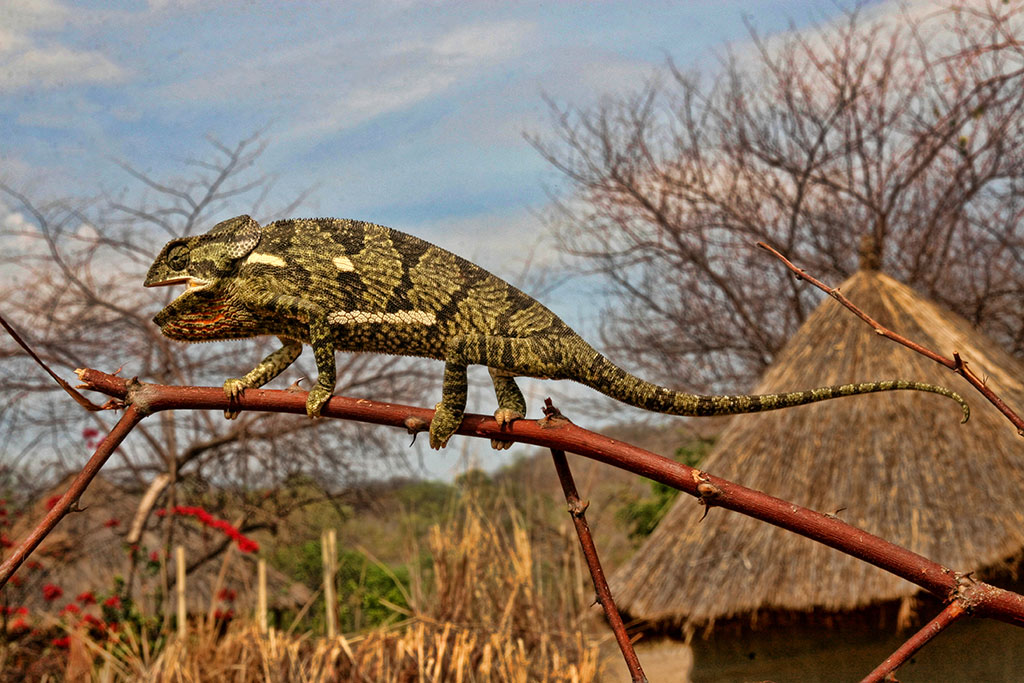
There are nine species of chameleon in Zambia with one being virtually extinct. Local superstition means they are bad omens and considered poisonous so they are often killed. Flap-necked chameleons can reach 30cm / 12in in length.
Zambia is also home to 11 species of gecko including common house geckos that help keep the mosquito population under control.
There are also several species of agamas and skinks including the Lavushi Manda skink found in Lavushi Manda National Park in Muchinga province.
TORTOISES AND TERRAPINS
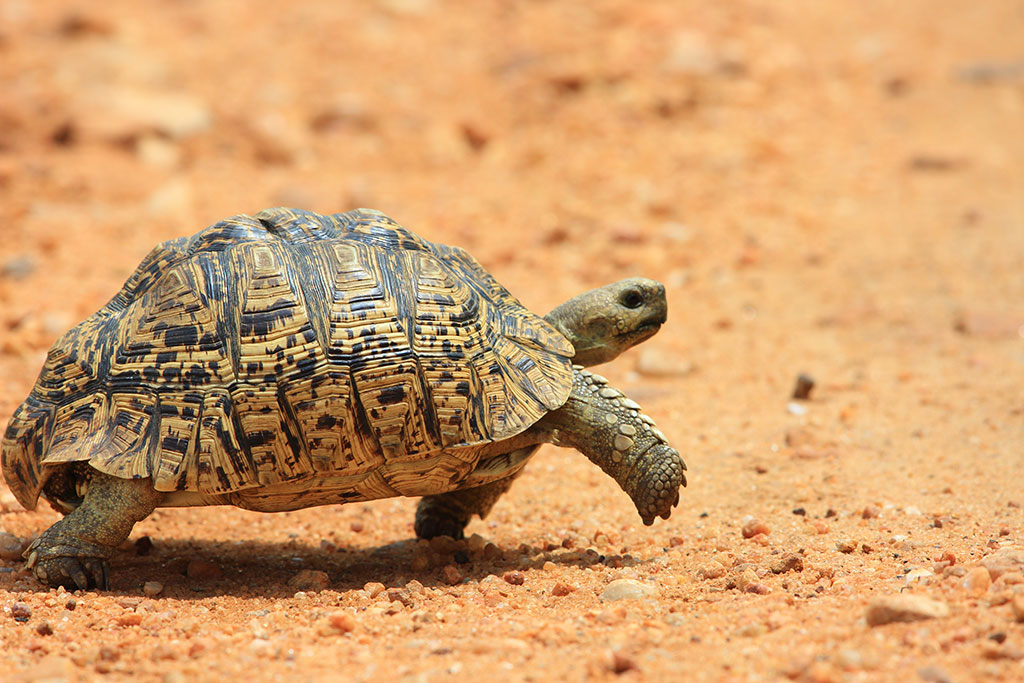
Leopard tortoises are the largest with attractive markings. Zambia is also a range for pancake tortoises, so called because of their characteristically flattened shells.
Tortoises and turtles are related while terrapins are a type of turtle that lives in brackish freshwater. Tortoises are land-living herbivores while terrapins are semi-aquatic.
Look out for Zambia’s six terrapin species basking on rocks along rivers and dams.
SNAKES
There are 92 known species in the country but snakes are generally shy and like to stay away from humans. If you come across one, leave it undisturbed and move on. There are 44 species in Kafue, 34 in South Luangwa and 36 in Kasanka, including a recently documented night adder.
Only about 16 are considered deadly, largely made up of pythons, cobras and mambas. Avoid black mambas and spitting cobras as well as puff adders. Unlike other snakes that prefer to slither away, a puff adder will stand its ground, ‘puff’ up and issue a warning before striking very quickly – within two seconds.
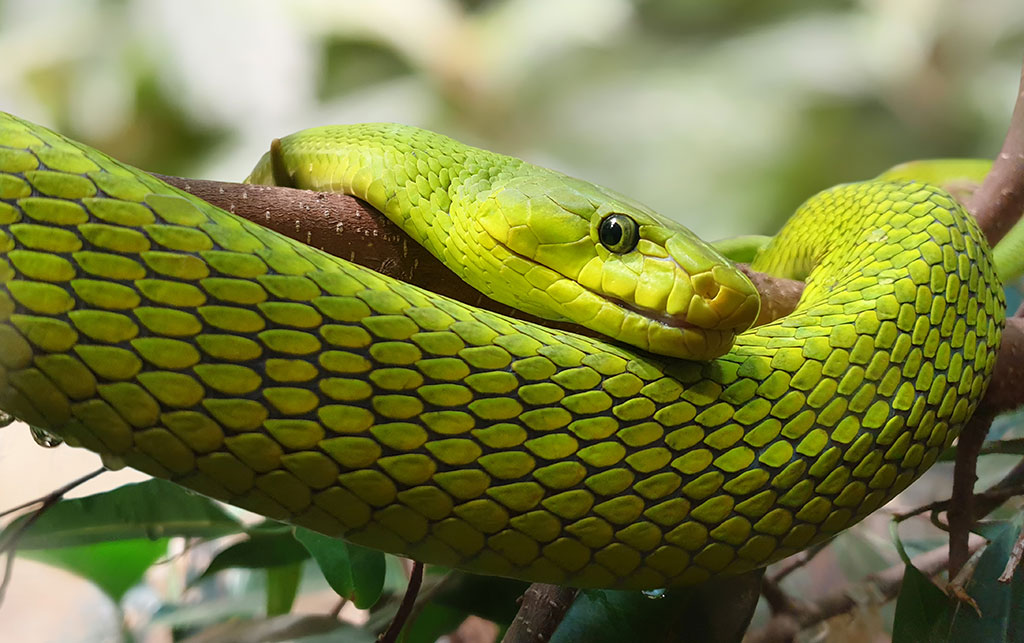
Their bites are extremely painful and can lead to many severe complications including necrosis (where tissue dies off), bleeding without coagulation and dangerously lowered blood pressure. When walking, step on rocks rather than over them as puff adders can lurk. If bitten, get medical attention immediately.