PRIMATES OF ZAMBIA
Night Apes
Similar to the bush baby but having a smaller body, more triangular face with huge big eyes, and a long thin tail with a fluffy end. They are arboreal and strictly nocturnal, occurring in a variety of woodland types, especially acacia, eating mainly insects and fruit.
Monkeys
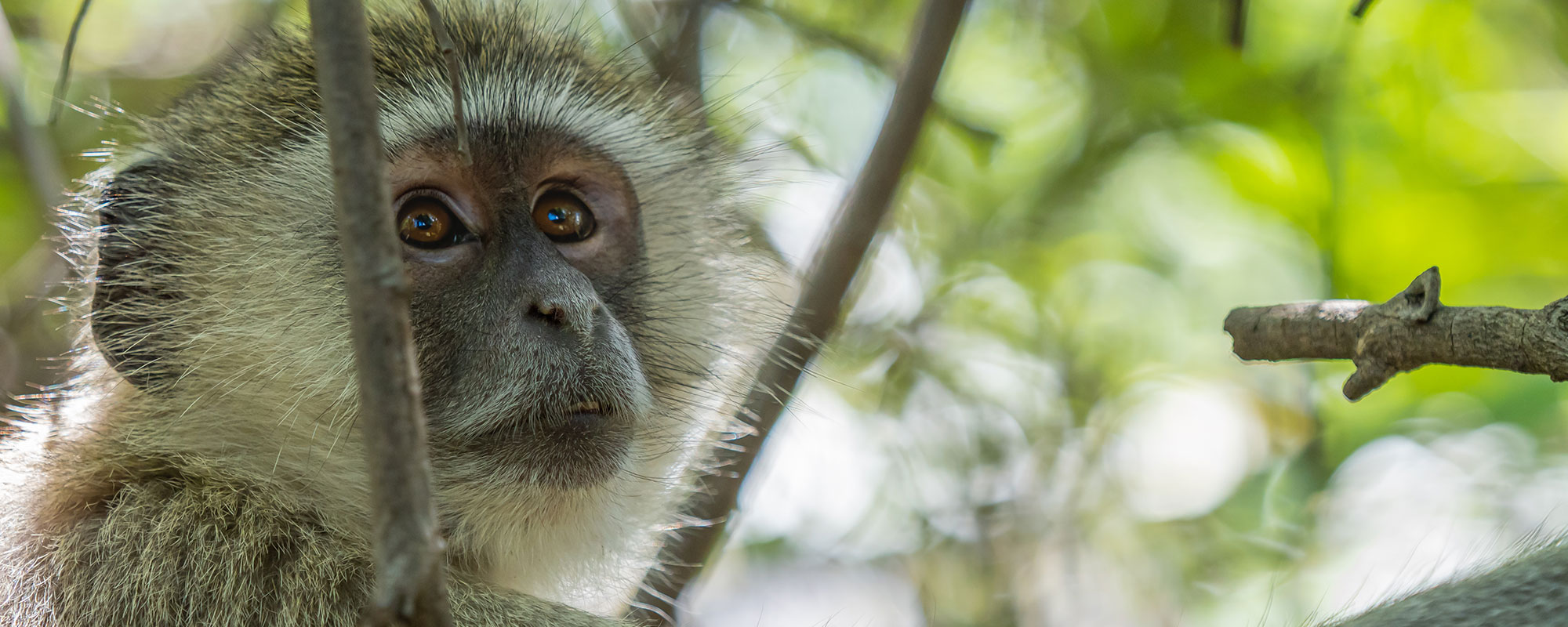
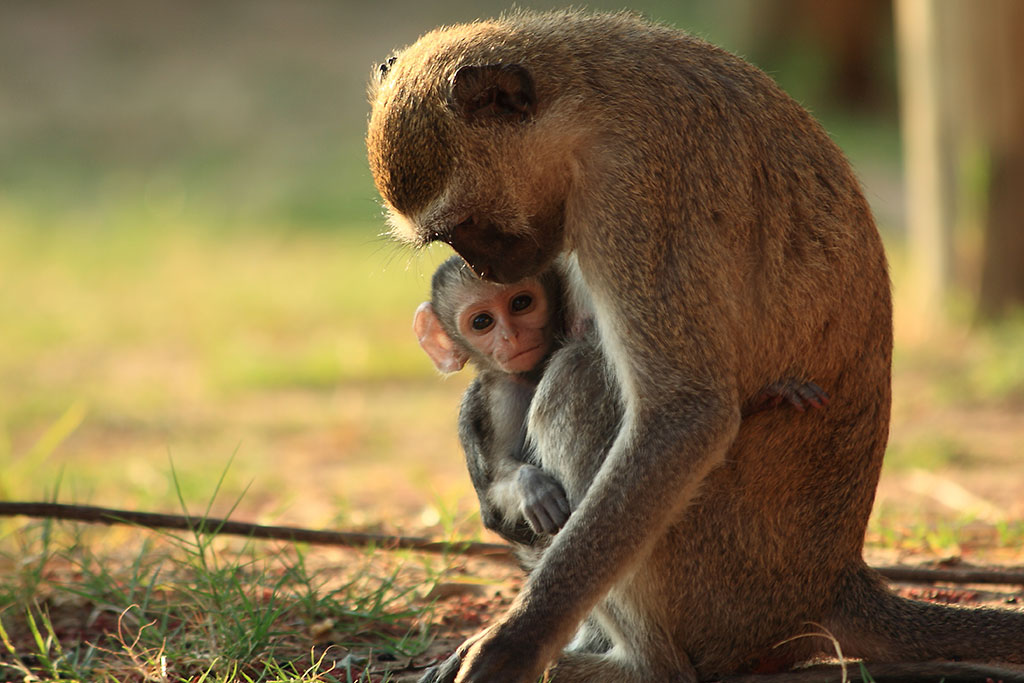
Three types of monkeys occur in Zambia. The vervet monkey is common throughout a variety of woodland types and around rest points (do not feed them: feeding encourages nuisance behaviour and dependency on human food that is not necessarily good for them).
Moving in troops of about 20, they feed on young shoots, seeds and fruit but occasionally will eat insects and eggs.
The blue monkey and Maloney’s monkey have occasionally been sighted in South Luangwa but their numbers are small.
Bush Babies
Called so because of its loud wailing scream, the bushbaby is an elusive tree creature, usually only spotted on night drives and then only its red eyes can be seen high up in the trees. They spend their days in hollow trees and forage among the treetops at night for insects and fruit. They are very agile in trees but awkward on the ground, hopping in a frog-like fashion. They are usually solitary but may group together to form small and temporary communities.
The lesser galago, also called bush baby, is one of the smallest primates, about the size of a squirrel. Despite its size, it is exceptionally vocal, producing loud, shrill cries surprisingly like those of a human baby. The plaintive cries and cute appearance may account for the name bush baby.
Bush babies have large, round eyes for good night vision and batlike ears that enable them to track insect prey in the dark. Fast, agile and accurate, they catch some insects on the ground and snatch others from the air. As they jump through thorn bush or thick growth, they fold their delicate ears flat against their heads to protect them. They fold them during rest, too.
Bush babies hide during the day in order to avoid contact with predators such as eagles and large snakes. Since they are easily captured on ground they mostly stay in trees and rely on their extraordinary jumping capabilities.
Baboons
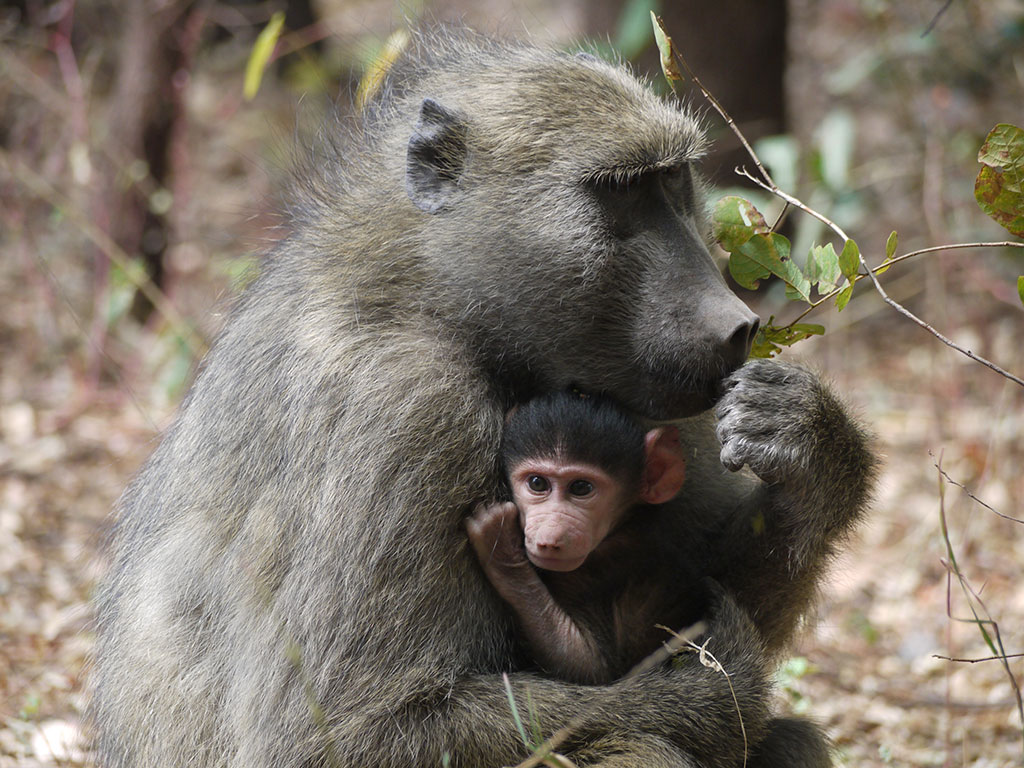
Chacma and yellow baboons occur in Zambia. They are both gregarious animals, occurring in troops of about 50 or more, feeding on the ground and in trees on fruit, seeds, rhizomes and insects.
The basic unit is a harem: one dominant male surrounding himself with a number of breeding females. Their mating is frequent but for very short bursts at a time. They breed at any time of the year and their gestation period is about six months. They have a strictly disciplined society, each member of the troop knowing their own status and ruled over by an elite group of elders.
Any member of the clan who tries to usurp another’s position is taken to task by the dominant males who gang up against the offender, resulting in an explosion of screaming and squealing.
The degree of dominance among ruling members of the clan is shown by the angle at which they hold their tails: the higher the angle, the more dominant the male.
Baboons sleep, travel, feed and socialise together in groups of about 50 individuals, consisting of seven to eight males and approximately twice as many females plus their young. These family units of females, juveniles and infants form the stable core of a troop, with a ranking system that elevates certain females as leaders. A troop’s home range is well-defined but does not appear to have territorial borders. It often overlaps with the range of other baboons but the troops seem to avoid meeting one another. Territory disputes are very noisy with lots of rushing around.
The baboon’s major predators are humans. Knowing that humans can easily kill or injure them when they are in trees, baboons usually escape through undergrowth. Males may confront other predators like leopards or cheetahs by forming a line and strutting in a threatening manner while baring their large canines and screaming. Baboons are fierce fighters and a demonstration such as this can put the predator on the run.
Chimpanzees
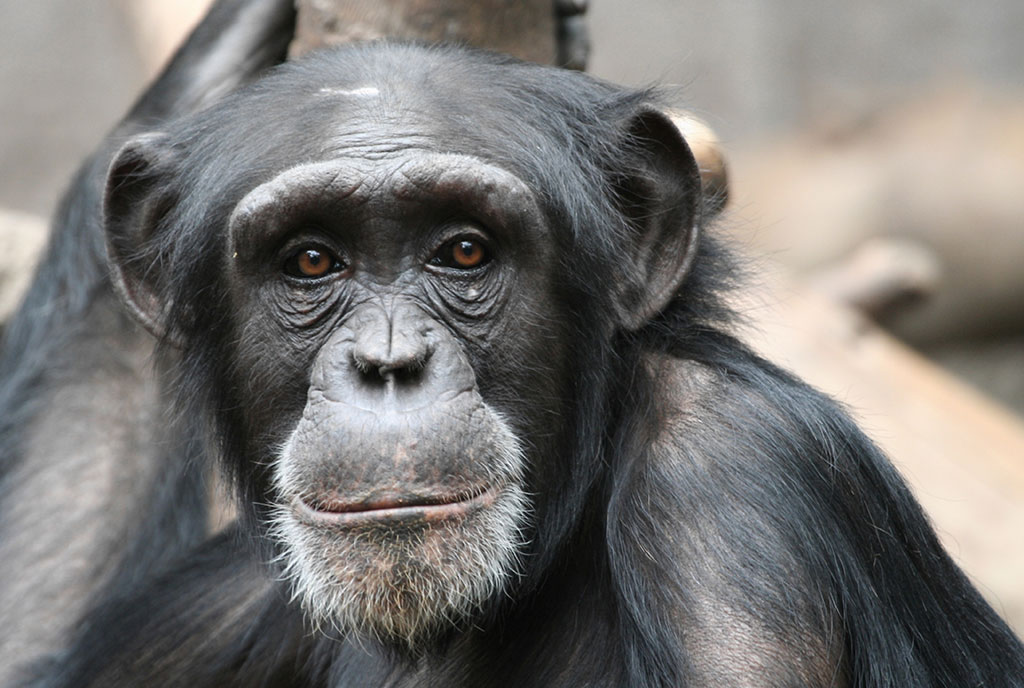
There are no wild chimps in Zambia but the north of the country is a known wildlife smuggling route from the Democratic Republic of Congo and other areas (chimps are captured for bushmeat, the pet trade and vivisection).
Chimfunshi Wildlife Orphanage is one of the largest and longest-standing sanctuaries in the world, providing a safe refuge for rescued, abandoned, injured and orphaned chimpanzees.
Chimfunshi is located in the Copperbelt Province and is open to visitors. It is a member of the Pan African Sanctuary Alliance.