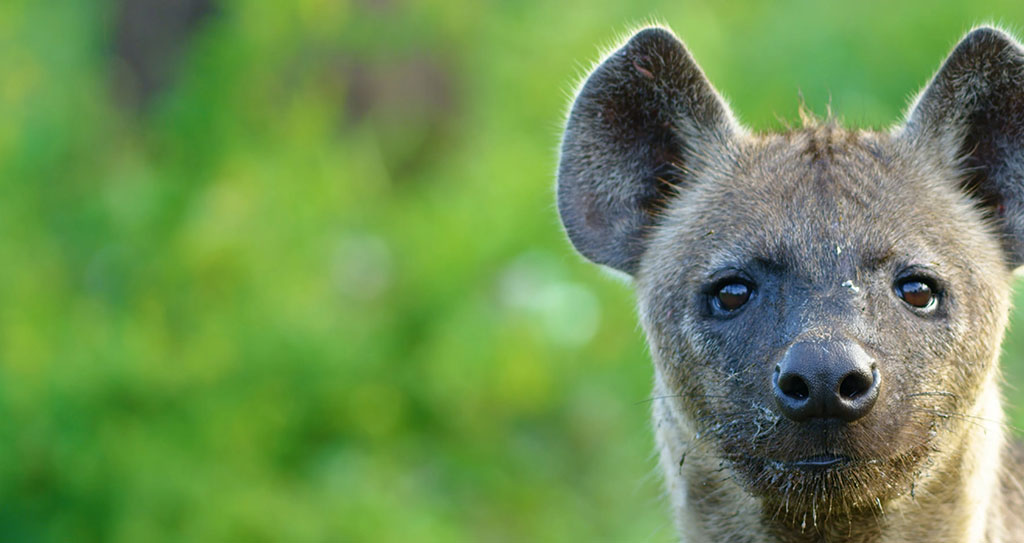
SPOTTED HYENAS
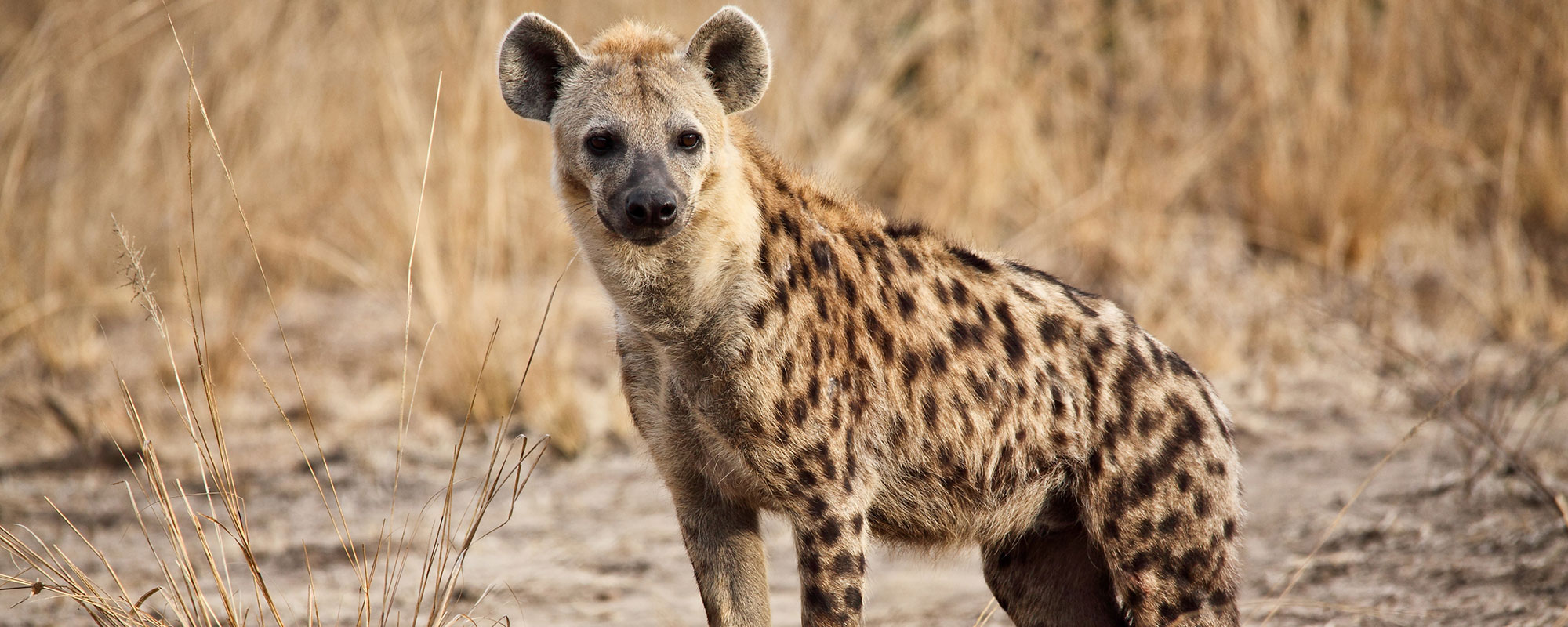
The spotted hyena (known as ‘spotties’) is common in Luangwa and Kafue National Parks. Although they have a reputation for feeding on carrion, they are actually very skilful hunters with high success rates. More often, lions steal hyenas’ prey rather than the other way around!
Bones left over at a kill are cracked open with their powerful jaws and consumed. Because of their high calcium content, hyena droppings are white, like chalk.
Spotted hyenas are organized into territorial matriarchal clans of related individuals that defend their home ranges against intruding clans. All are led by an alpha female. The centre of clan activity is the den, where the cubs are raised and individuals meet. It is usually situated on high ground in the central part of the territory. Its above-ground entrances are connected to a series of underground tunnels. They live in holes in the ground where they breed, having one or two in a litter, the young looking like cute brown puppies.
Their gestation period is three-and-half months and they can live up to 40 years. Their drawn out laugh-like call can often be heard at night. They usually move at night but can be seen in the day.
When a hyena’s tail is carried straight, for example, it signals attack. When it is held up and forward over the back, the hyena is extremely excited. In contrast, it hangs down when the hyena is standing or walking leisurely. If frightened, the hyena tucks its tail between the legs and flat against the belly and usually skulks away.
The powerful jaws and digestive tract of the hyena allow it to process and obtain nutrients from skin and bones. The only parts of prey not fully digested are hair, horns and hooves; these are regurgitated in the form of pellets.
Among the species that prey on hyenas are lions, who will attack them at every opportunity, as well as wild dogs and even other hyenas. Brown and striped hyenas are not found in Zambia.