CHEETAHS
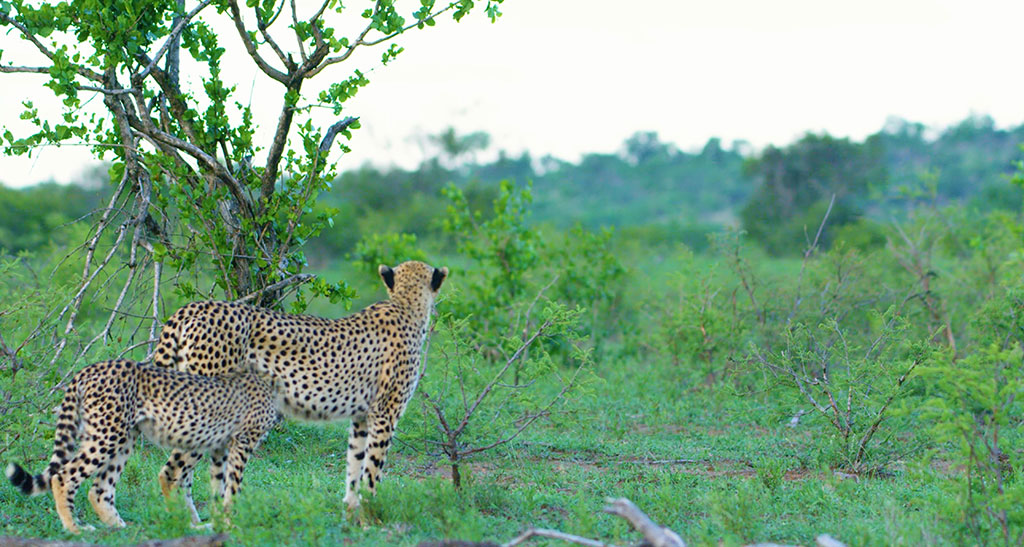
Cheetah are present in the larger national parks but very scarce and not often seen. Kafue offers the best opportunities. They usually move in small family groups and occasionally alone. They favour open country and light woodland. They prey on small or medium antelope such as oribi, puku and impala.
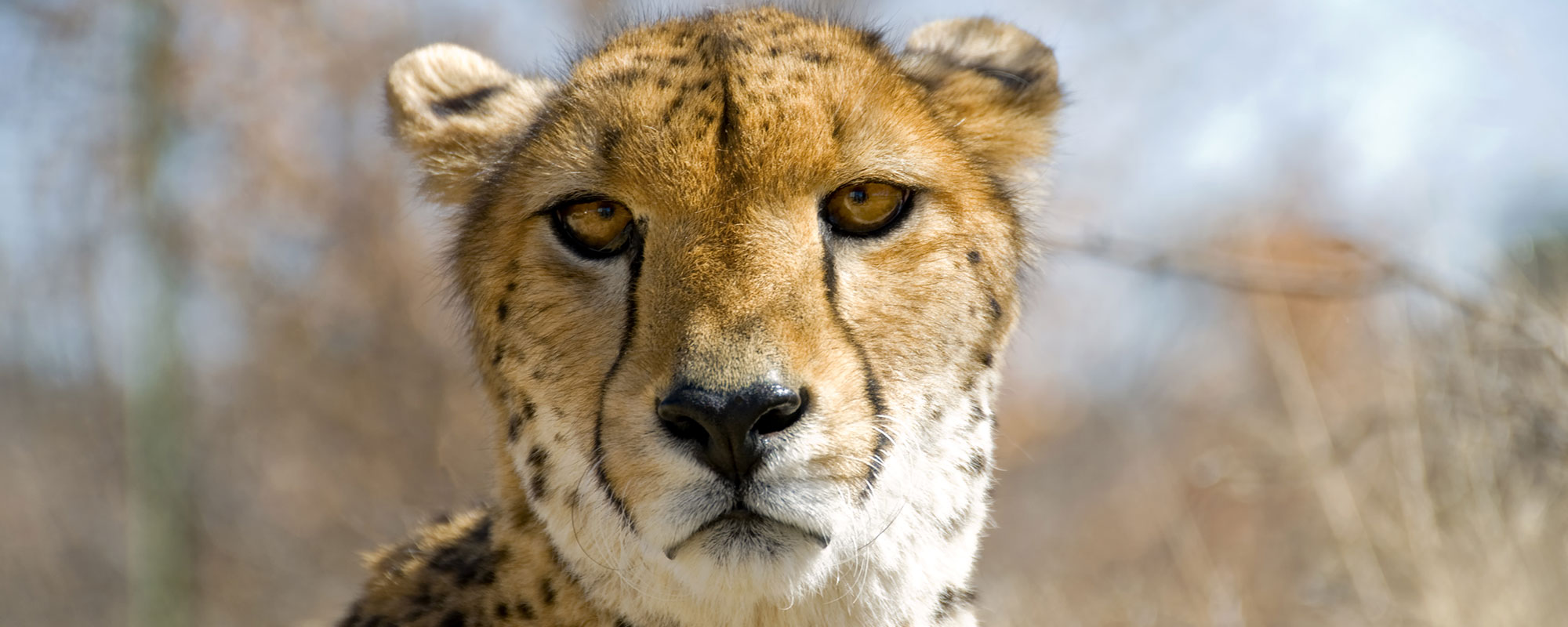
The cheetah is built for speed. It has long, slim, muscular legs, a small, rounded head set on a long neck, a flexible spine, a deep chest, non-retractable claws, special pads on its feet for traction and a long tail for balance. Although fast, the cheetah cannot run at full speed for long distances (90m / 100 yards is about the limit) because it may overheat.
The cheetah is the fastest animal on four legs, capable of reaching speeds of over 97kmh / 60 mph. To cope with the physical demands of sprinting, the cheetah has longer back legs to give greater stride and weight has been lost at the expense of muscular strength. Small cheetah cubs can fall prey to hunting lions and mothers often have difficulty defending their slow-moving offspring.
Although known as an animal of the open plains that relies on speed to catch its prey, research has shown that the cheetah depends on cover to stalk prey. They get as close to the prey as possible, then in a burst of speed tries to outrun their quarry. Once the cheetah closes in, it knocks the prey to the ground with its paw and suffocates the animal with a bite to the neck
A shy creature that roams widely, the cheetah is not seen as easily as some other cats.
Never numerous, cheetahs have become extinct in many areas, principally due to shrinking habitat, loss of food, disease, human predation and a high rate of cub mortality.
In some areas 50 to 75 percent of all cheetah cubs die before they are three months old.