|
HOME
TOUR & SAFARI Co's
PLACES
TO VISIT
Victoria Falls
Zambezi River
Lake Kariba
Lake Tanganyika
Other Waterfalls
Chimp Sanctuary
Shiwa Ngandu
Lake Bangweulu
Livingstone Memorial
Lake Mweru
Monuments
Museums
Art Galleries
GAME
RESERVES
South Luangwa
North Luangwa
Lower Zambezi
Kafue
Sumbu
Lochinvar
Nyika
Sioma Ngwezi
Kasanka
Bangweulu Wetlands
Liuwa Plain
Mosi-o-Tunya
Luambe
Blue Lagoon
Other Smaller Parks
CITIES
& TOWNS
Lusaka
Livingstone
The Copperbelt
Other Towns
SAFARIS
Walking
Safaris
Birding Safaris
Canoeing
Safaris
Mobile Safaris
Elephant Back Safaris
Horse Back
Safaris
Photographic
Safaris
Open
Vehicle Safaris
ADVENTURE/SPORTS
Driving around Zambia
White Water
Rafting
River Boarding
Bungi Jumping
Abseiling
Gorge Swinging
Horse Trails
Tandem Kayaking
Canoeing/River Safaris
House Boating
Tiger and Fly
Fishing
WILDLIFE
Illustrated
Checklists
BIRDLIFE
In depth synopsis
Checklists
DIRECTORY
Adventure
Companies
Airlines
Air
Charter
Art
Galleries
Backpackers
Campsites & Chalets
Car
Hire
Coaches
/ Buses
Embassies
Emergency Numbers
Fishing
Camps
Game
Lodges
Golf Courses
Private
Reserves
Govt Offices
Guesthouses
Hospitals
Hotels
Safari Operators
Tours
Trains
Travel
Agents
TRAVEL INFO
Quick
Facts
Getting
There
Getting
Around
Handy Information
Visa Info
PEOPLE
History
Culture
Major Tribes
Ceremonies
ENVIRONMENT
Geography
Vegetation
Conservation
MAPS
PHOTO GALLERIES
LINKS
TRAVEL NEWS
ENQUIRIES
ADVERTISING
|
BIRDLIFE IN
ZAMBIA
By African standards, Zambia is well known ornithologically. So far 740 species have been recorded here.
Avifaunal Areas of Zambia
To a large extent Zambias avifauna is that of the
Central African Plateau. The vegetation is principally miombo woodland, bisected by grassy
dambos along drainage lines. In some areas the miombo woodland is replaced by other
woodland types, dry forest or thicket. Along watercourses there may be
riparian forest, or
in wetter areas in the north, wet evergreen forest. Most of these habitats have a
distinctive set of birds.
Zambia
also has low-lying valleys. These include the Luangwa and Middle Zambezi Valleys and the
country between Lakes Tanganyika and Mweru. A number of birds found in these areas are
different from those occurring at higher altitudes.
A very small part of Zambia has montane altitudes. The
avifauna here is quite different from that of the rest of the country and includes several
species with very limited ranges.
Codes used are: (E)Endemic (found only in) to this habitat.
(m) Established migrant, (n) (s) (e) (w) Found only in northern/southern/eastern/ western
Zambia.
Habitats
WOODLAND
Of Zambias woodland birds, a few are found only in
particular kinds of woodland - miombo or mopane, for example or in association with fig or
palm trees. Most, however, occur in a range of woodland types, and often also the edge of
forest. This is true of many of the forty-four species of diurnal raptor of the family Accipitridae
- the vultures, hawks, eagles, etc. Thus the Bateleur, Shikra and Lizard Buzzard can
be found almost anywhere. Among the less common members of this family, the African Cuckoo
Hawk, Bat Hawk, Western Banded Snake Eagle, Ayres Hawk Eagle and Crowned Eagle are more
common in Zambia than in many other countries where they occur.
Some of the birds inhabiting woodlands are the doves,
pigeons, parrots, cuckoos. owls, nightjars, kingfishers, hornbills and the Broad-billed
Roller. Barbets, honeyguides, woodpeckers, Swallows, the Fork-tailed Drongo and
flycatchers. See the bird checklist for a full list of species found in Zambia.
MIOMBO WOODLAND
Lying at the centre of the miombo zone of south-central
Africa, Zambia has a greater variety of miombo birds than any of its neighbours. Miombo is
the commonest woodland type in Zambia and such areas have an undisturbed avifauna.
Many of the birds of the miombo woodland join mixed-species
bird parties. A typical bird party may contain members of ten or twenty species, mainly of
territorial insectivorous birds. The party travels slowly through the woodland and
membership changes as the route leaves and enters individual territories. A party is often
first noticed where one of its more conspicuous members is seen or heard - a Fork-tailed
Drongo or Arnots Chat, for example. The following are some
of the birds that, where they occur, usually join mixed-species bird parties in miombo
woodland. Scimitarbill, Hoopoe, barbets, honeyguides, woodpeckers, pipits,
cuckoo shrikes, eremomelas, Miombo Barred Warbler (E), hyliotas, flycatchers,
Chinspot Batis, tits, Spotted Creeper (E), orioles, Brubru, Southern Puffback, Grey-headed
Bush Shrike, Fork-tailed Drongo, Violet backed Starling, Yellow-throated Petronia,
Chestnut-mantled Sparrow-weaver (E) (n), Weavers, Seed-eaters, Cabaniss Bunting (E)
More independent birds found here are the Pale-billed
Hornbill, Central Bearded Scrub Robin, Trilling Cisticola (n) and many of the
sunbirds.
MOPANE
WOODLAND
In addition to those birds found in any woodland type,
mopane has several species, listed below, that in Zambia are largely or entirely confined
to this habitat. All are easily noticed because they are vocal, numerous and/or
conspicuous, while in the case of the sparrow-weaver the nests cannot be missed. The Black-cheecked
Lovebird is of particular interest because it has a very small range and is
considered endangered. Among the threats to its continued existence in the wild are
drought and the possibility that illegal capture for the cage-bird trade might resume.
Others are the Three-banded Courser, Red-billed Hornbill, Southern Long-tailed
Starling, Southern Grey-headed Sparrow and the White-browed Sparrow-weaver
LIGHT WOODLAND
In places, the natural woodland is open, such as on the
edges of plains and dambos. Elsewhere light woodland has been created by human activity.
Among the characteristic birds of such areas are the Black Shouldered Kite,
Black-bellied Bustard, Namaqua Dove (m), Grey Lourie (s), Bare-faced Go-away Bird (n),
Little Bee-eater, Lilac-breasted Roller, Flappet and Fawn-coloured (w) Larks, Red-backed
Cisticola (m), Fiscal Shrikes and the Yellow-fronted Canary
PARTICULAR
TREES
Trees and bushes of one species or another in the Acacia
group occur in much of Zambia, particularly south-west. Among birds associated with these
are the African Mourning Dove, Acacia Pied Barbet, the migrant Tit
Babbler, Burnt-necked Eremomela, Crimson-breasted Shrike, Cape Glossy Starling,
Burchells Starling, Scaly-feathered Finch, Black-faced Waxbill, Shaft-tailed Widow and
in sub-montane areas, Brown Parisoma.
In baobabs, the Red-billed Buffalo Weaver
often builds nests. Hollows in the same tree may be used for breeding by the Mottled
Spinetail.
Several birds are associated with one or more species of
Palm. Thus the Palm-nut Vulture normally occurs in the vicinity of raphia
or elaeis palms. Dickinsons Kestrel, Red-necked Falcon, African Palm Swift
and Collared Palm Thrush often nest in palms such as borassus.
Large spreading sycamore fig trees in otherwise rather open
country are a conspicuous feature of parts of southern Zambia. Numerous species eat the
fruit or make hole nests in dead branches. One bird that does both is Chaplins
Barbet. It occurs in a limited part of Zambia centred on the Kafue flats and is
Zambias only endemic bird. This striking white and black species is considered
near-threatened.
BAMBOO
Extensive bamboo thickets occur in scattered parts of
Zambia, notably on the Copperbelt and along the edges of the Luangwa Valley. At rare times
when bamboo seeds are available, the Pied Mannikin can be extraordinarily
common in such areas, but at other times it is scarce, local and partially nomadic.
USNEA
Or old mans beard, Usnea is an
essential component of the habitat of two uncommon and poorly known insectivorous weavers
of miombo woodland - Bar-winged west of the Luangwa Valley and olive-headed to the East.
The usnea lichen is used in nest construction.
SCRUB
Scrub consisting of low bushes, small thickets or regrowth
separated by stands of grass occur both naturally and on land formally cleared. Several of
the species of this habitat are very common and include: Laughing Dove, Red-faced
Mousebird, Common Bulbul, Thrush Nightingale, White-browed Scrub Robin, Marsh Warbler (m),
Common Whitethroat, Rattling Cisticola, Tawny-flanked Prinia, Arrow-marked Babbler,
White-bellied Sunbird (s), Brown headed and Black-crowned Tchagras, Tropical Boubou,
Red-billed Quelea, Yellow Bishop, Red-collared Whydah, Red-billed and Jamesons
Firefinches, Blue (s) and Violet eared (w) Waxbills and the Village and Dusky
Indigo-birds.
THICKET
Extensive areas of deciduous thicket occur in the low-lying
area between Lakes Mweru and Tanganyika. Typical birds include the migrant African
Pitta and the resident White-throated Nicator. The same species
occur in similar habitats in the middle Zambezi and Luangwa Valleys, alongside the Natal
Francolin, Barred long-tailed Cuckoo, Sombre bulbul, Eastern Bearded Scrub Robin and
Livingstones Flycatcher.
Generally smaller areas of thicket occur over much, but not
all of the plateau. These thickets as well as those at lower altitudes are the habitat of
migrant Red-capped Robin and River Warblers, and such residents as
Crested Guineafowl, African Broadbill, Yellow-bellied and Terrestrial
Bulbul, Bleating Bush Warbler and the Melba Finch.
FOREST
Forest Habitats cover a small part of the surface of
Zambia. However, they have a diverse avifauna that is largely different from that of the
neighbouring woodlands. In forest, as in miombo woodland, many of the smaller birds gather
into mixed-species foraging bird parties.
Some birds occur regularly at forest edge or in such near
forest habitats as dense woodland, well developed thickets or rich vegetation on termite
mounds. These include Blue spotted Wood Dove (n), Schalows Turaco, Lady
Rosss Turaco (n), Emerald Cuckoo, Speckled Mousebird (n), Narina Trogon,
Brown-headed Kingfisher, Black-backed Barbet (n), Yellow breasted Apalis, Dusky Flycatcher
(n), Collared Sunbird, Brown and Blue-billed Firefinches, Black-tailed Grey Waxbill (n)
and Black-faced Canary (n).
Riverbanks often support a growth of riparian forest. Even
if only a few meters wide or discontinuous, this habitat and the water it overhangs may be
occupied by White-backed Night Heron, Green-backed Heron, Hadeda, African Black
Duck, African finfoot, Pels Fishing Owl, Half-collared and Giant Kingfishers, Bohms
Bee-eater (n) Olive woodpecker (n) Grey-olive Bulbul (n), Cassins Grey Flycatcher
(n), Black throated Wattle-eye and Spectacled Weaver.
North of about 14 degrees, patches of wet evergreen forest,
often called mushitu, grow on moist ground along rivers or at their headwaters.
This rich habitat is more widespread at plateau levels than in low lying country between
lakes Mweru and
Tanganyika and it does not occur in
the northern
Luangwa Valley. Mushitu birds that are relatively
widespread in northern Zambia include Woolly-necked Stork, Golden-rumped
Tinkerbird, Purple-throated Cuckoo Shrike, Little and Cabaniss Greenbuls,
Yellow-throated Leaflove, West African Thrush, Bocages Robin, Evergreen Forest and
Lauras Warblers, Grey Apalis, Blue-mantled Flycatcher, Olive Sunbird, Many-coloured
Bush Shrike, Square-tailed Drongo, Splendid Glossy Starling (m), Dark-backed Weaver and
Black-bellied Seed-cracker. Less widespread mushitu species include Cinnamon Dove,
Margarets Batis (w) and Green Twinspot.
Dry evergreen forest in northern Zambia is generally less
well developed than mushitu but, where rich enough, supports many of the same birds. The
dry Cryptosepalum forests of the north-west support an additional species, the Gorgeous
Bushshrike.
The Marsh Tchagra is one of a number of
birds that occupy the dense, tangled bracken-briar at the outer edge of forest in northern
Zambia.
Despite the few montane forests in Zambia, a large number
of montane forest birds occur here. They include the Red-breasted Sparrowhawk,
Rameron Pigeon, Pink-breasted Turtle Dove, Mountain Nightjar, Scarce Swift (m), Bar-tailed
Trogon, Silvery-cheeked Hornbill, Moustached Green Tinkerbird, Eastern Mountain Greenbul,
Yellow-streaked Bulbul, Olive and Orange Thrushes, White-chested Alethe, Starred and Olive
Flanked Robins, Sharpes Akalat, Yellow throated Warbler (Mafinga only),
Chestnut-headed Apalis, Slaty Flycatcher, Cape Batis, African Hill Babbler, Eastern
Double-collared Sunbird, Fulleborns Black Boubou, Wallers Red-winged and
Slender-billed Chestnut-winged Starlings and the Red-faced Crimsonwing.
Several further birds occurring only at montane altitudes
like in the dense bracken briar at the edge of montane forest: Red-tailed
Flufftail, Cape Robin, Cinnamon Bracken Warbler, Mountain Yellow Warbler, Churring and
Black-lored Cisticolas, Baglafecht and Bertrams Weavers, Swee Waxbill, African
Citril and Streaky Seed-eater.
WETLANDS:
DAMBOS GRASSLANDS
On the generally flat plateau, rivers are fed principally
by dambos, where water seeps out into grassland and drains into the watercourse running
through the centre of the dambo. On the upper parts of the dambo, close to the woodland
edge, scattered trees are occupied by the White-winged Black Tit. The driest areas of
sometimes extensive short grassland are inhabited by Temmincks Courser (m),
Red-capped Lark (m) and the Dessert Cisticola. The dry montane grasslands of the
Nyika Plateau have populations of Red-winged Francolin and Common Quail.
The intermediate levels in typical dambos are permanently
spongy and have short grass. This habitat is common enough in northern Zambia but does not
occur in many other parts of Africa. Consequently many of the birds found here are
uncommon elsewhere or have a localised distribution. They include Blue Quail (m),
Long-toed (n) and Streaky-breasted (m) Flufftails, Black and Rufous Swallow (m) (n),
Yellow-throated (e), Fulleborns (w) and Grimwoods (nw) Longclaws,
Pectoral-patch, Black-tailed (nw) and stout (n) Cisticolas, Yellow-mantled and Marsh (n)
Whydahs, Fawn-breasted waxbill (n), Locust Finch and Black-chinned Quailfinch (n),
Croaking Cisticola and red-billed Quelea (m).
The centre of a dambo consist of a series of different
wetland habitats. In reedbeds there may be little Bitterns, Red-chested Flufftail,
African Water Rail, Little Rush and Lesser Swamp Warblers and Chirping Cisticola. Where
sedges are common, there may be Lesser Black-backed Cisticola (n) or in a few areas,
Great-crested Grebe. Where reeds overhang water, weavers such as
Bocages (nw), Large Golden or Yellow-backed (ne)occur. In water-lily covered
pools African Pygmy goose, White-backed and Yellow-billed Duck and African and Lesser
Jacana. On bare ground or mud, Hamerkop, Senegal Wattled Plover and Cape Wagtail occur.
MAJOR
WETLANDS
Zambia has a number of major wetlands. On the plateau,
there are huge wetland areas along the Chambeshi River, at
Bangweulu, in eastern Kawambwa District, on the upper Kafue and Jiwundu
Rivers, at Lukanga and Busanga Swamps, on the Kafue Flats and Barotse Floodplain and on
the Zambezi along the Namibian border. At lower levels, major wetlands exist on the lower
Luapula Rivers, at Lake Mweru Wantipa, on the Luangwa River, at
Lake Kariba and on the Zambezi below Kariba Gorge. Those that have been declared
Ramsar sites - internationally important wetlands - are
Lochinvar and Blue Lagoon on the Kafue Flats and Chikuni in the Bangweulu
area.
On the periphery of many of these wetlands are floodplains,
which may be occupied by Abdims (m) and White (m) (e) Storks, Montagus
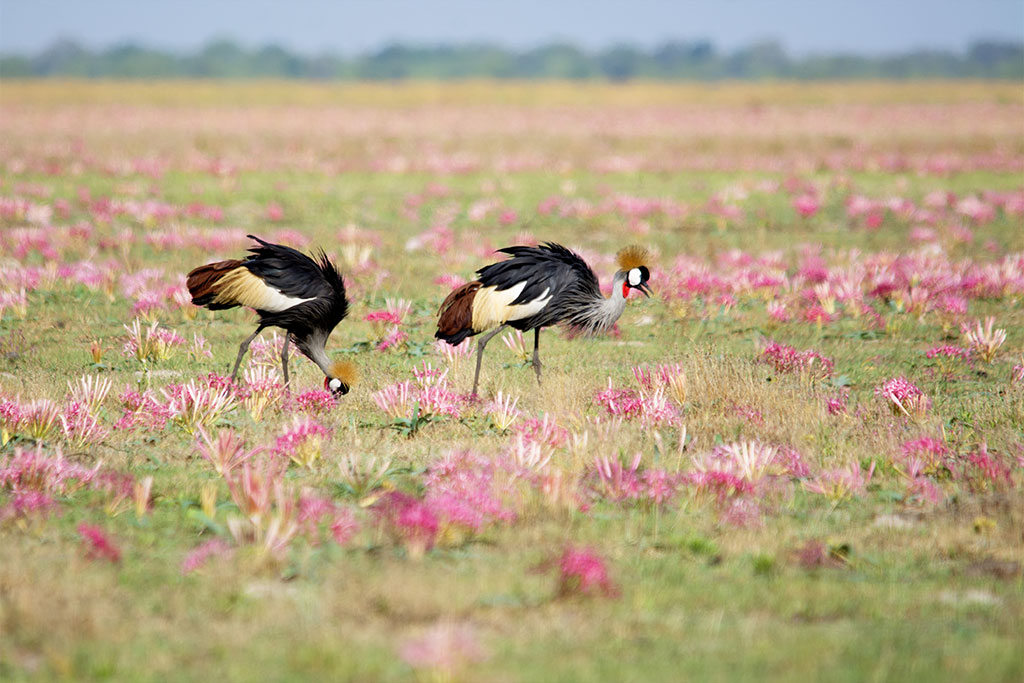
Harrier (m), Secretary Bird, Red-billed Francolin (sw), Wattled Crane, Denhams
Bustard, Common Pratincole, Caspian (m) and crowned (m) Plovers, Ruff (m), Marsh Owl,
Natal Nightjar, White-cheeked (n) and Blue-cheeked (m) Bee-eaters, Rufous-naped Lark,
White-throated Swallow, Richards Pipit, White-rumped Babbler and Quail Finch.
Shallowly inundated vegetation is usually rich in both the
number of birds and the variety of species, which include Common Squacco and
Rufous-bellied Herons, Yellow-billed Egret, Saddle-billed Stork, Sacred and Glossy Ibises,
Fulvous and White-faced Whistling Ducks, Spur-winged Goose, Knob-billed and Yellow-billed
Ducks, Red-billed and Hottentot Teals, Southern Crowned Crane, Painted and Ethiopian
Snipes, Black-winged Stilt, Long-toed Plover, Malachite Kingfisher and Sedge Warbler.
Another important wetland habitat is bare or poorly
vegetated mud, often at the waters edge. This habitat is most extensive when water
levels are falling towards the end of the dry season. Among birds occurring here are Little
Egret, Grey Heron, Ringed (m), Three-banded and Blacksmith Plovers, Marsh (m), Wood (m)
and Common (m) Sandpipers, Greenshank (m) and Little Stint (m).
Shallow open water is used by a number of larger
waterbirds, including White-breasted and Reed Cormorants, White and Pink-backed
Pelicans, Goliath Heron, Yellow-billed and Open-billed Storks, African Spoonbill,
Whiskered and White-winged Black (m) Terns and Pied Kingfisher.
Deep open water is usually lacking in birds, though on Lake
Tanganyika the occasional group of Lesser Black-backed Gulls can be seen.
A large number of waterbirds use tall swamp for breeding or
roosting. Other occupying this habitat more permanently include Purple Heron,
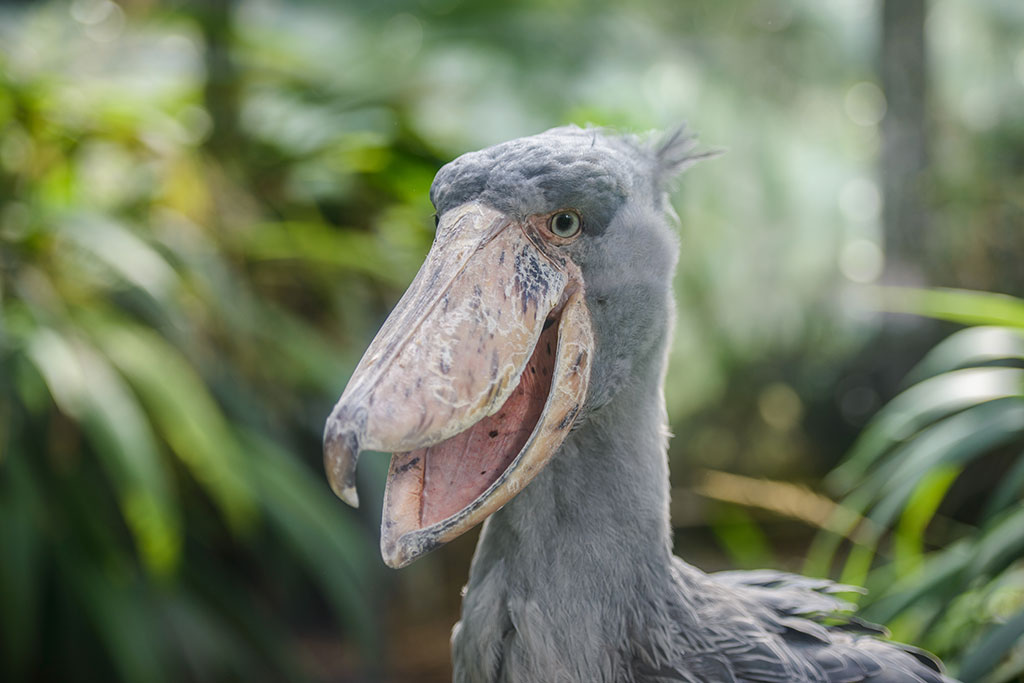
Shoebill (n), African Marsh Harrier, Purple Gallinule, Common Moorhen, Coppery-tailed
Coucal, Swamp Boubou (w), Southern Brown-throated Weaver (w), African Masked Weaver (race
katangae) (n) and Red-shouldered Whydah.
Large stands of papyrus swamp occur in northern Zambia and
are the habitat of the Greater Swamp Warbler, Swamp Flycatcher and Papyrus Yellow
Warbler. Conservationists consider the last of these to be vulnerable. The
Zambian race is found in papyrus only at the mouth of the Luapula River, where it enters
Lake Mweru.
RIVERS
Slow-moving sections of major rivers such as the
Luangwa and
Zambezi provide two further
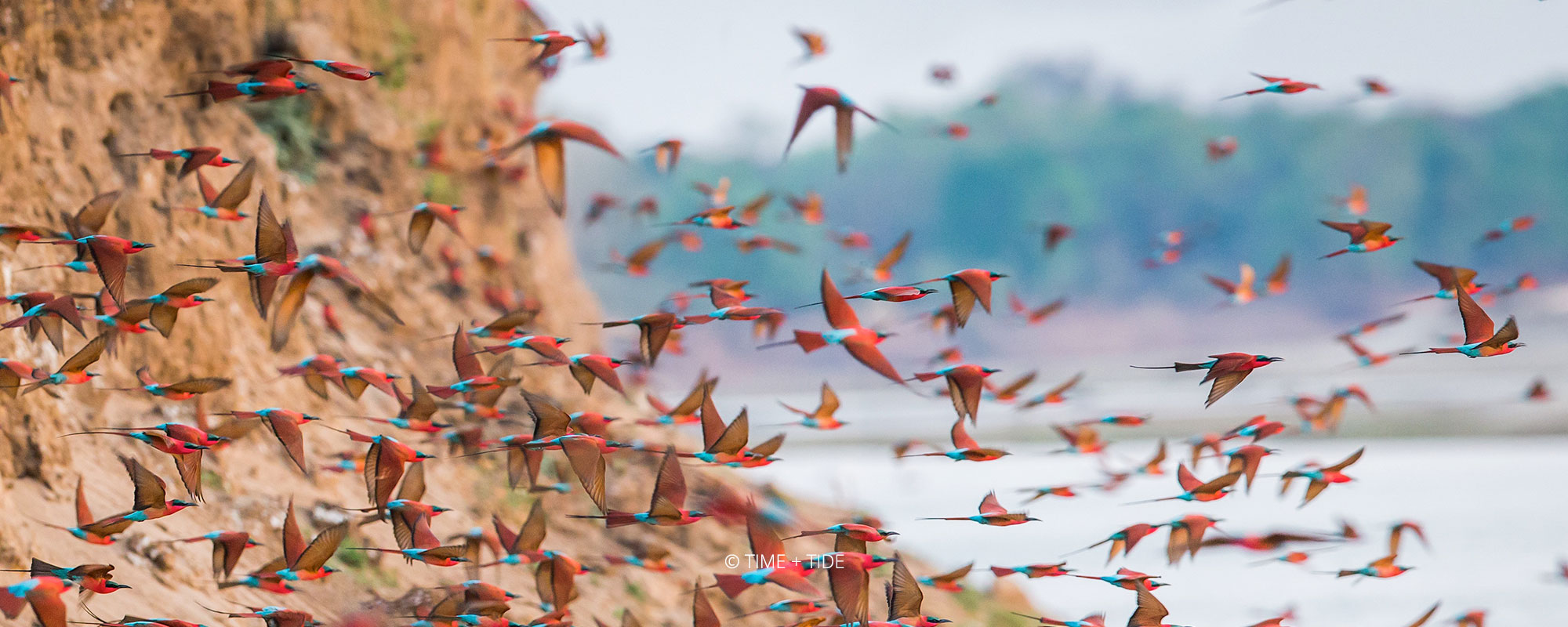
ornithologically important habitats: horizontal sand bars and vertical sand cliffs. Among
the birds associated with sand bars are the Egyptian Goose, Water Dikkop,
White-crowned and White-fronted Sand Plovers and the African Skimmer. Those making
extensive use of sand cliffs for breeding include Horus Swift, White-fronted and Southern
Carmine Bee-eaters and the African Sand Martin.
Rocks exposed in rivers are the habitat of the migrant Rock
Pratincole and, in some areas, of the Mountain Wagtail. Forbes
Plover may breed where exposed rocks are adjacent to a river, as at the Zambezi
Rapids.

ROCKY
HABITATS
Miombo woodland on rocky ground occurs patchily over much
of Zambia, though not in areas of Kalahari Sand. It is typical of escarpments, such as
those flanking the Luangwa and Middle Zambezi Valleys. This is the habitat of a number of
somewhat localised birds such as Shelleys Francolin, Freckled Rock nightjar,
Striped Pipit, Familiar Chat and Rock-loving Cisticola. In south-eastern Zambia
the Boulder Chat and Cape Bunting occur in similar places where there are
also large boulders.
Extensive rock exposures, including precipices, are of
limited occurrence and often difficult of access. Their specialised avifauna includes the Black
Stork, Augur Buzzard, Black Eagle, Taita and Peregrine Falcons, Mottled, African Black and
Little Swifts, African Rock Martin, Mocking Chat, White-necked Raven and Red-winged
Starling.
MAMMALS
The yellow-billed and Red-billed Oxpeckers are
dependent on large game animals, where they occur, or, in western Zambia, on cattle and
even donkeys. Hooded, White-backed, Lappet-faced and White-headed Vultures
feed at the carcasses of dead animals, including domestic cattle. They are joined by the
Marabou Stork, which may also be present at abattoirs. The Cattle Egret (m) and
Wattled Starling (m) frequently feed around cattle or game animals. Ground
trampled by cattle or other animals may attract the Yellow Wagtail (m) or
Groundscraper Thrush.
TERMITES
When winged termite alates emerge after rain, many birds
congregate to eat them, even such primarily vegetarian species as whydahs and waxbills.
Among species that are particularly likely to appear at such emergences are certain
migrants - European Hobby, European Swift and European Swallow.
SKY
In Zambia the European Swift (m) occurs only in the sky,
often near rain. The same is usually true of the House Martin (m), though
at times it perches on trees or wires. Both species apparently sleep in flight. The same
is doubtless true of the Alpine Swift, a dry season visitor to the skies
of eastern Zambia.
Among other species that feed principally in the sky
irrespective of the habitat below are European Bee-eater (m) and European Swallow (m).
Many of the larger diurnal raptors are most frequently seen
overhead. Some, such as Vultures, Black-breasted Snake Eagle and Bateleur, spend
much of the day soaring. Others, such as the Yellow-billed Kite, common Buzzard
and Lesser spotted Eagle, pass over on migration.
FIRES
Many species of birds are attracted to bush fires by the
fleeing or roasted insects and other animals. Almost always present are the
Fork-tailed Drongos, often in large numbers. Others often present include Marabou
Stork, Yellow-billed Kite (m), Dickinsons Kestrel, Rollers, Hornbills and
Swallows.
BURNT
GROUND
The Dusky Lark (m) is attracted to fiercely burning bush
fires. It may begin singing before smouldering has stopped and it breeds in the ashes.
Likewise, the Bronze-winged Courser (m) often appears shortly after the
ground has been burnt. Among other partial dry-season visitors requiring bare open ground
that may become available only after the passage of fire are Crowned Plover,
Temminks Courser, Hoopoe, Red-capped Lark, Grey-rumped Swallow, Buffy Pipit and
Capped Wheatear.
MAN-MADE
HABITATS
During the twentieth century human activity has created
many new habitats now utilised by birds. The House Sparrow is entirely
dependent on man-made structures and is new to the Zambian avifauna. Several species,
particularly of Swallow, are now much more common than previously.
Buildings made of permanent materials are
used for nesting by the Grey-headed Sparrow. The same species and the Mosque
Swallow regularly nest in electrical installations. The House Sparrow,
which first appeared in Zambia in 1965, is more strictly confined to towns than the Grey-headed
Sparrow and is particularly common at grain milling factories. Several other
birds originally associated with rocky habitats have occupied towns. Thus the little Swift
nests under overhangs at the top of tall structures such as silos. Less frequently, the
Peregrine Falcon and African Rock Martin occur at modern
buildings. The barn and spotted Eagle Owls often nest in roofs and on the
Nyika Plateau the red-rumped and Blue (m) Swallows nest under eaves.
Concrete bridges are regularly used for
nesting by the Little African White-rumped Swifts (m) and Lesser Striped and Wire-tailed
Swallows. In northern Zambia the red-throated Cliff Swallow (m) nests mainly under bridges
and is currently expanding its range. In the Mbala areas, the red rumped Swallow also
nests under bridges. Culverts under roads are the main nesting site of the red breasted
Swallow.
A number of nocturnal birds perch on roads
at night and may be killed by traffic. These include the Three-banded and Bronze-winged
coursers, Spotted Eagle Owl and nightjars. During the day doves, particularly the Cape
Turtle Dove, come to untarred roads to ingest grit. At times, European Swallows (m) perch
in flocks on tarred roads.
In some areas Pied Crows regularly nest in Pylons.
Raptors that frequently perch on pylons include the Brown Snake Eagle and Dark Chanting
Goshawk. Electricity and telephone wires are used as perches by many species including
Black-shouldered Kite, Namaqua Dove (m) European (m) and Lilac-breasted Rollers, European
Swallow (m), Sooty Chat, Red-backed (m), Lesser Grey (m) and Fiscal Shrikes, Fork-tailed
Drongo and the various species of Indigobird.
Suburban gardens may have a relatively rich avifauna. The
presence of water attracts such seed-eating species as weavers, Bishops, whydahs,
firefinches, waxbills, mannikins, indigobirds, widows and canaries.
Nectar-bearing flowers attract sunbirds. Dense shrubbery provides
suitable habitat for Heuglins Robin and Tropical Boubou. Fruit
trees may attract the Red-faced Mousebird.
In Eastern Zambia the African Pied Wagtail
often occurs in villages. Within its range, the Red-billed Firefinch may
nest in thatched roofs. Where eucalyptus trees have been planted in rural settlements,
they are often used for nesting by the Pied Crow and Village Weaver.

Farm dams are common in commercial farming areas and
usually attract many species of waterbird. The standing dead trees in new dams may be used
as nesting sites by the scarce White-breasted Cormorant.
On commercial farms, extensive cleared areas may attract
migrant raptors such as Lesser spotted and Steppe Eagles, Lesser kestrel and
Eastern Red-footed Falcon. Bare fields may be used by Abdims stork
(m), Crowned Plover (m), Red-capped Lark (m), Chestnut-backed Sparrow-Lark, Richards
and Buffy (m) Pipits and Capped Wheatear (m). Wheat crops may be attacked by
flocks of Red-billed Quelea.
Land cleared for more traditional agriculture is often used
by such species as Kurrichane Buttonquail, Laughing and Cape Turtle Doves,
Black-winged Red Bishop, Yellow Bishop, White-winged and Red-collared Whydahs and Common
Waxbill
Conservation

According to critics established by Birdlife International,
the following birds recorded in Zambia are threatened:
Extinct: none
Threatened: critical: none
Threatened: endangered : White-winged Flufftail (no certain records), Black-cheeked
Lovebird
Threatened: vulnerable: Slaty Egret, Cape Vulture (only a vagrant to Zambia),
Lesser Kestrel, Taita Falcon Corn Crake, Wattled Crane, White-chested Tinkerbird (may be
aberrant Golden-rumped Tinkerbird), Blue Swallow, Papyrus Yellow Warbler
Near-threatened: Madagascar Squacco Heron, Shoebill, Lesser Flamingo, Pallid
Harrier, Black-winged Pratincole, Great snipe, Chaplins Barbet, Grimwoods Longclaw, Churring Cisticola.
©Dylan Aspinwall
|
Shortcuts on this page
Related Pages
|