|
LAKE
TANGANYIKA

This
vast inland sea was first made known to the
European world in the mid 1800’s by the English
explorers Richard Burton and John Speke. They
pursued it as the source of the Nile, arriving
at its shores in February of 1858, only to
discover that the Ruzizi River in the north,
which they thought to be the Nile, flowed into
and not out of the lake. (Their incredible
journey is documented in the movie ‘Mountains of
the Moon’.)

Tanganyika’s waters lap Tanzania, Burundi, Congo
DR and Zambia. It is
the longest fresh
water lake in the world
and the
second deepest after lake Baikal in
Russia. The immense depth is because it lies in
the Great Rift Valley, which also has created
its steep shoreline. It reaches a depth of 1433
metres (4 700 feet), which is an astounding 642m
below sea level.
Although Zambia can only lay claim to 7% of its
surface area, it stretches north to south a
distance of 677 kilometres (420 miles) and
averages about fifty kilometers wide (31 miles).
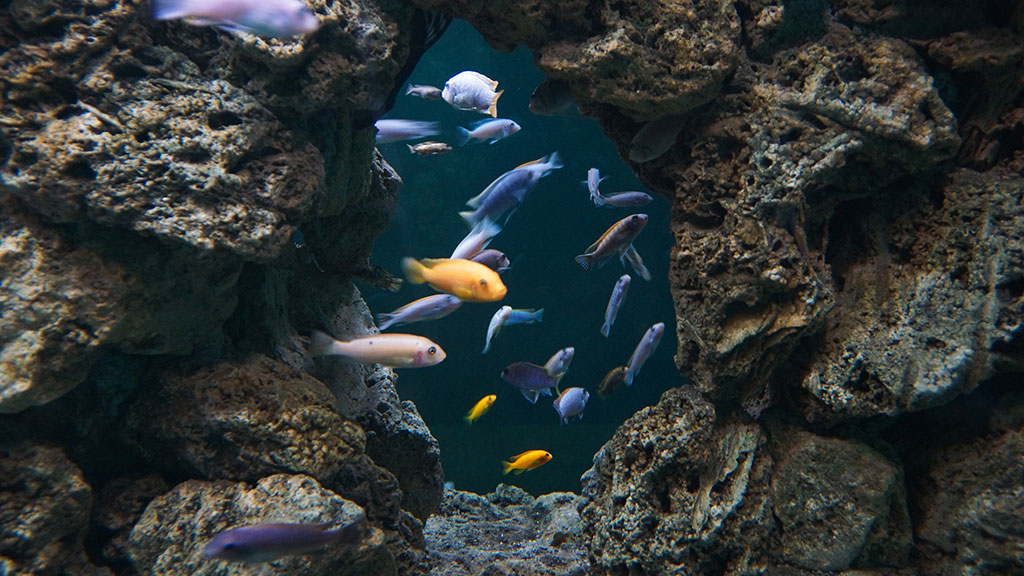
The clear waters host more than 350 different
species of fish and is
well known for
aquarium fish exports and excellent angling.

The
fertile circulating surface water, although not
tidal, provides abundant plankton for its
inhabitants which in turn provides much needed
protein for both the local and export markets.
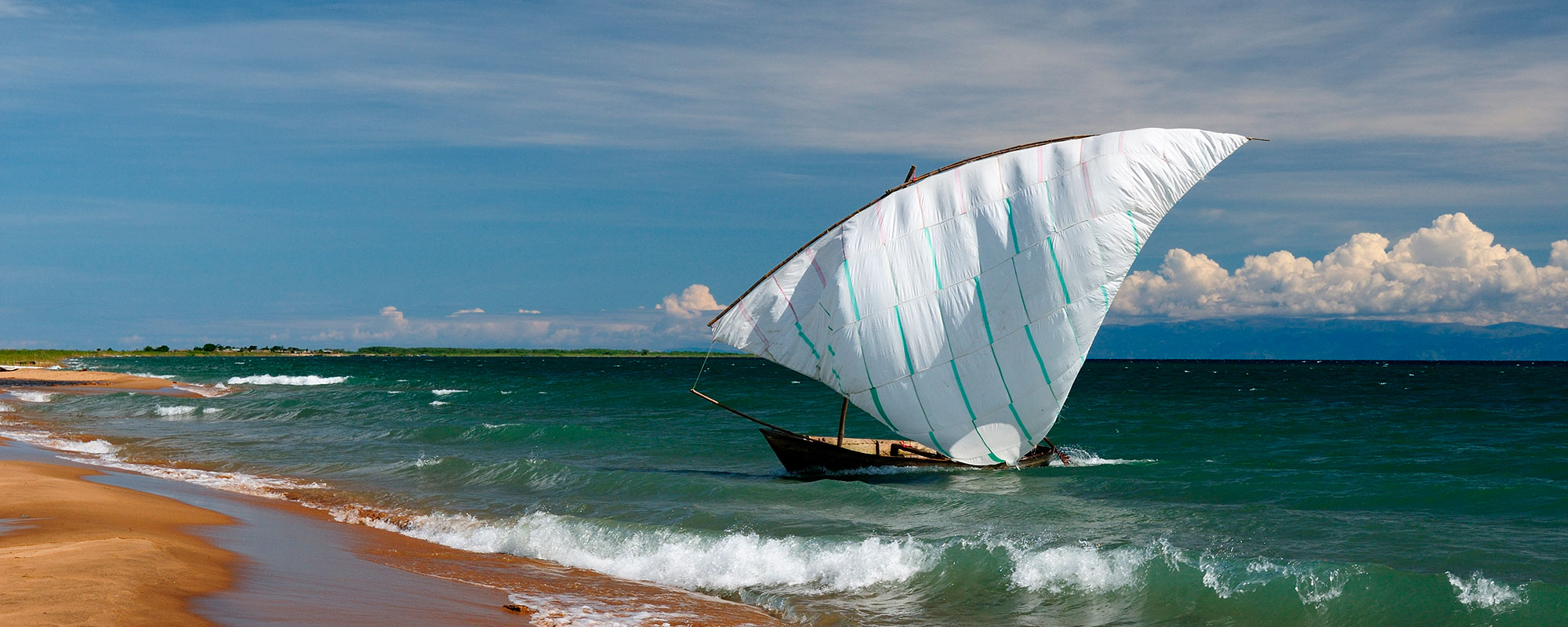
The stiff winds that blow off the surrounding
mountains aid the continual movement which
inhibits the spread of bilharzia, the parasitic
disease carried by shallow water snails.
A landlocked Sea
It
is essentially a landlocked sea but in years of
heavy rain the lake overflows into the Lukuga
River which in turn feeds Congo DR’s Lualaba
River
Despite the ferocious surface storms that occur,
driving waves up to six meters high (20 foot),
no mixing of the lower relict waters occur. The
bottom 1 200 meters of the lake remain ‘dead’ -
either too high in hydrogen sulphide or too low
in oxygen to support life. This ‘fossil water’
may be as old as 20 million years. By contrast,
the oceans, because of currents and upwellings
have life forms even as low as 11000 meters (36
080 feet).
Lake
Tanganyika has a remarkably
uniform
temperature. The lower regions are only
a mere 3° C colder than the surface. The reason
for this strange phenomenon has yet to be
discovered.
Tropical FIsh
Lake
Tanganyika boasts over
350 species of
fish of which most are endemic. Like
Lake Malawi, Lake Tanganyika is extremely old,
and the combination of its age and ecological
isolation has led to the evolution of unique
fish populations. Since new species are being
discovered continually in these remarkable
lakes, it is difficult to determine which has
the highest diversity, but they at least share
the distinction of being the top two lakes in
the world in terms of biodiversity, whilst Lake
Tanganyika has the highest proportion of endemicity, concentrated mainly in the Zambian
waters of the lake.
The
Lake Tanganyika Biodiversity Project
has been set up to ensure that its biological
diversity is maintained. The aim of the project
is to produce an effective and sustainable
system for managing and conserving the
biodiversity of Lake Tanganyika. As Lake
Tanganyika is a border for four countries
Zambia, Burundi, Democratic Republic of Congo-
the success of the project will depend on how
well these countries work together. The project
which began in 1995 comes to an end in the year
2000 and is funded by the Global Environmental
Facility through United Nations Development
Programme (UNDP).
Species of particular note include the Giant
Nile Perch (Lates angustifrons) and Small
Nile Perch (Luciolates stappersii) which
are important commercial and sports fishing
(that is angling) species, Goliath Tiger (Hydrocynus
goliath) and the English Fish or Lake
Tanganyika yellow-belly (Boulengerochromis
microlepis) which are important angling
species (the latter being especially prized for
its good eating), the Kapenta (Limnothrissa
miodon) which is an important source of
fish-protein in Zambia, the rare Bichir (Polypterus
congicus), and a great variety of endemic
Cichlids.
Biologically Unique
Regarded as one of the most biologically unique
habitats on earth, Lake Tanganyika is also an
evolutionary showcase due to its great age and
stability. Ninety eight percent of the lake’s
cychlids (which comprise two thirds of all the
lake’s fish) are unique to Tanganyika. Also
endemic are all seven of its crabs, five out of
the thirteen bivalve molluscs, more than half of
its gastropod molluscs and eleven of its thirty
three copepod crustaceans.
Sport fishing is very popular here and catches
include the goliath tigerfish and Nile perch.
Crocodiles inhabit most of the shoreline, except
around Mpulungu, probably due to the noise of
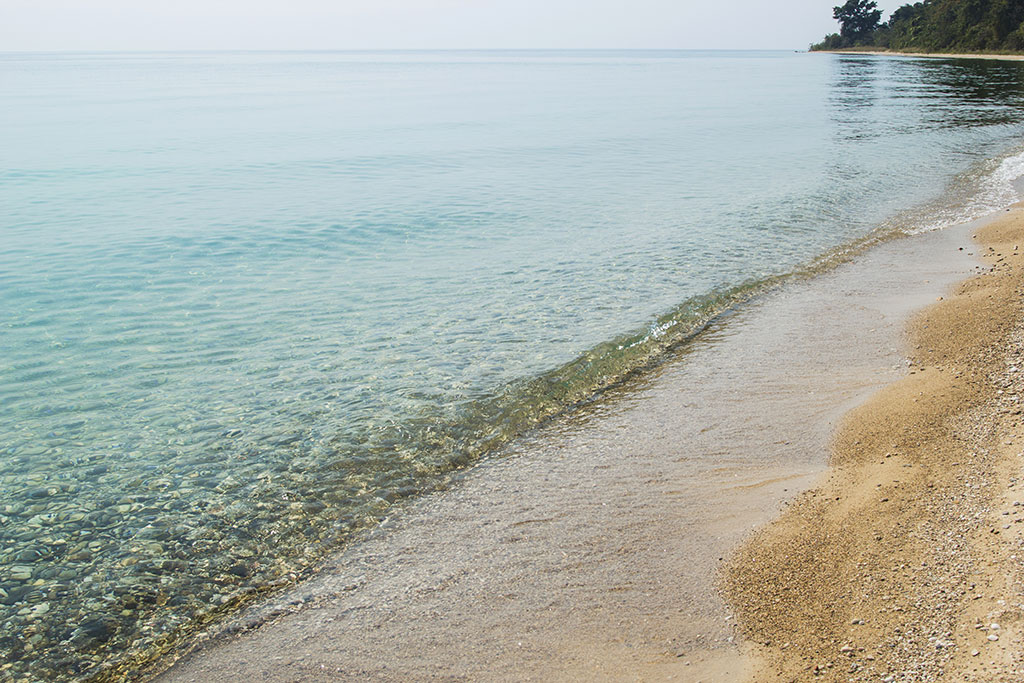
people and motorboats. Swimming in the lake (in
the Mpulungu area only!) is an absolute treat.
Warm, clear, salt free water that changes from
silky stillness, to high waves for a great body
surf - usually with no apparent reason for the
change. Storms from way up north probably cause
the still waters in the south to agitate.
Lake Tanganyika Ferry
The MV Liemba, a
large ex German warship that has been converted into a passenger ferry,
arrives at the port of Mpulungu every Friday morning and leaves in the
afternoon for Kigoma in Tanzania and Bujumbura in Burundi. If you have time
to do the week long trip there and back or if en route further up Africa,
this is an experience not to be missed. It’s not luxurious but the trip
itself offers a spectacular experience of this vast Lake in the heart of the
continent. There are ‘first class’ cabins with double
bunks and one family cabin with en suite facilities. The toilets seldom work
properly so be prepared. It has a carrying capacity of 500 passengers and by
the time it has left Kigoma, it is usually full.

It was
originally built as a cargo vessel when German occupied what was then known
as Tanganyika, now Tanzania. The First World War broke out before its
completion and it was converted to a military expedition ship to be used
against the British forces in Northern Rhodesia, now Zambia and the Belgian
Congo, now Zaire. It was bombed by the Belgians in 1916, raised and dragged
to Kigoma where it sank again. The British, who had taken control of
Tanganyika after the war, raised her again and renovated her to a cargo and
passenger vessel. The name Liemba was the name Livingstone gave to the
Africans living in the area when he first reached the Lake.
Mpulungu
Mpulungu is
Zambia’s only port. It is the gateway to the north by ferry and provides an
important outlet for exports and imports by ship. A small town with very few
shops, it does however bustle with activity when the ships arrive bringing
passengers and goods from Burundi and Tanzania. It lies in a natural bay
along the lakeshore, protected by a large island just a few hundred metres
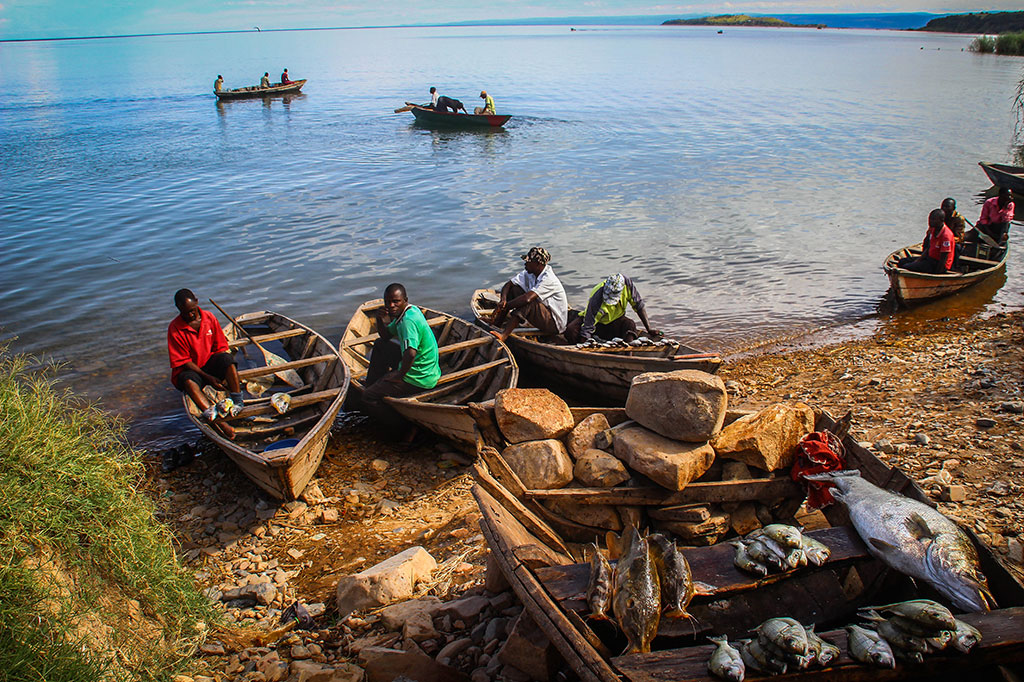
out. The villagers are mostly fishermen and every evening at sunset, a long
procession of fishing boats hitch a ride from one of the bigger fishing
barges and head out to the horizon for the evening’s catch. There is also a
tropical fishing industry here that exports aquarium fishes all over the
world.
Getting there
Driving there
from anywhere is a long haul, but well worth the effort. One can go straight
to the port of Mpulungu on the Great North Road via Mpika and Kasama. Or
drive to
Nsumbu National Park,
which borders the Lake, via Mporokoso. Kasaba Bay cannot be reached from
Mpulungu as there are mountains and a river in the way, but it is possible
to take a boat, a distance of about 60kms. There is an airstrip at Kasaba
Bay for chartered flights, but no scheduled flights go there at present.
This may change with the imminent re-opening of the three lodges there.
Check with the
Tourist Board for the latest
developments.
Roads in the Northern Province
The dirt road
network in the northern province has undergone major reconstruction.
Specifically the road from Nchelenge to Kaputa, Nsumbu on to Mporokoso and
both roads from Mporokoso to either Kasama or Kawambwa are in excellent
condition. The road from Kawambwa to Mporokoso crosses the Kalungwishi river
as a bridge now. (no longer a pontoon)
The access road to
Lumangwe has also been repaired and it is quite good all the way to
Kabweluma falls. The Campsites at Lumangwe falls and Ntumbuchasi falls are
clean with some basic thatched shelters and drop toilets. The caretakers at
both are very helpful and knowledgeable, and will supply firwewood for a
small fee.
The tar road from
Kasama to Mbala/Mpulungu is quite bad but work has also started there. There
are also plans to open the road from Sumbu to Mbala which is currently only
passable by 4x4 in the dry season. Several loops within Sumbu park are also
being worked on.
Where to stay
The most
popular for backpackers and campers is a place on the edge of town called
Nkupi Lodge. It has twin bed, thatched rondavels and a well-shaded
campsite with toilets and showers and is self catering. They offer boats for
hire for fishing, snorkelling and swimming in the Lake.
Kasakalawe Lodge
Situated 3km from Mpulungu on Lake Tanganika's lakeshore.
4 en suite Chalets (sleeping 10 people @ a time) Campsite, Backpackers
welcome and offers fishing, boat trips, trips and hikes to Kalamba Falls,
snorkling (365 different species of Chilchids - tropical fish, indineous to
Lake Tanganika)
Tanganyika Lodge is a few kilometers west of town on a beautiful
stretch of rocky lakeshore. It has three twin chalets, two en-suite family
chalets and camping facilities. Fresh fish is available every day and
they offer both catering and non catering rates. Boats can be arranged for
fishing and trips to Kalambo Falls

Mishembe
This is a small private secluded beach at the base of Kalambo Falls
owned by Luke Powell. The only way to access the bay is by boat which makes
the place even more peaceful and remote. The beach is made up of fine white
sand which leads into the clearest blue water where tropical fish can be
seen. At present only tented accommodation is available with either catering
or self catering. Luke offers guided walks up to the Falls, boat trips up
the river mouth and fishing. With only the famous Red Colobus monkeys as
companions you can totally relax under the stary night feeling miles away
from reality !! To book you can either phone or fax Kasama on 04 221615.

Further west are three fishing
and game lodges in the
Sumbu
National Park which borders the lake:
Nkamba Bay ,
Kasaba Bay and Ndole Bay.
Ndole
Bay is nestled amongst lush tropical vegetation opening onto its own
exclusive beach, on the
shores of a unique lake. A fleet of twin engine boats opens the
secrets of Tanganyika, while shaded hammocks, sunset paddles and a library
allows days to slip by. Situated just outside Sumbu National Park, the
untouched wilderness is only a step away. Accommodation is available in
thatched, en-suite chalets; through to a beachside campsite. Meals are
prepared for those not self catering and a fully stocked bar is
central to the dining area. Activities include fishing, game viewing, hot
springs, waterfalls, isolated rainforest, lake cruises, snorkelling and
cultural interactions as well as overnight bush camping tours along the
lake.
Ndole Bay
is the first recreational SCUBA diving facility in Zambia offering the
latest equipment for hire and all PADI courses under our resident instructor
and ecologist. Tanganyika’s crystal clear waters and brightly coloured
fish are a delight in this mystical underwater paradise.
Nkamba Bay Lodge is
an exclusive private lodge set in a stunning location on the shores of
Lake Tanganyika. It is the only lodge in Nsumbu Game Park, one of the
unspoilt, secluded treasures of Africa. The lodge offers outstanding
sports fishing, bird watching, game viewing, canoeing, walking safaris
and photographic tours or simply a relaxing getaway in one of Africa's
undiscovered National Parks.
Sightseeing
About
two kilometres east of the town of Mpulungu is Niamkolo Church.
Built in 1895 by the London Missionary Society it is the oldest surviving
stone built church in Zambia. The fifteen meter tower was a landmark for
boats using the port of Mpulungu. The church was built by one Adam Purves
who had joined the mission as a helper and teacher. There is a main hall and
a three story tower. The walls are nearly a meter thick comprising two skins
of roughly dressed sandstone quarried on the Mission estates, with mud or
anthill bonding. The gap between the skins was filled with rubble. Only the
walls and the tower remain. In 1908 the Mission decided to move inland due
to the high incidence of sleeping sickness, and the church fell into disuse
and decay.
On the lake
shore at Mpulungu, there is a colourful Market selling
vegetables, fish, cloths, salaula (second hand clothing) and other odds and
ends.
Kalambo
Falls are on
the Kalambo River bordering Zambia and Tanzania. They are the second highest
waterfalls in Africa plunging a breathtaking 221m in one uninterrupted drop
- over twice the height of the Victoria Falls! The width of the falls varies
from 2m in the dry season expanding to an impressive 15m after heavy rains,
cascading down a sheer cliff into a deep green pool below, through the gorge
and on about 3 more kilometres into Lake Tanganyika.
There are two
access options. One can take a drive via Mbala, then take the northerly road
to the border of Tanzania, bearing left at road junctions. Park at the
summit and walk down to the falls. It is advisable to have someone mind your
vehicle. This road is quite bad, especially in the wet season. The other way
is to hire a boat from Mpulungu across the Lake taking about an hour. Then
climb up to the summit where the falls begin. This is about a two hour hard
walk. Bring plenty of water for the journey there and back as the water in
the Kalambo river is not safe to drink. The route there is not marked so ask
for a guide at the lakeside village where you start to climb and try to
leave as early as possible in the morning to avoid the midday heat.
Look out for the
Marabou storks that nest in the sheer cliffs of the rocky gorge. Also an
area for the palmnut vulture and vulturine fish eagle. There is a cliff path
along the southern side of the gorge leading to a viewpoint directly
opposite the falls and another further along overlooking Lake Tanganyika
East of
Mpulungu is Kituta Bay. The hull of the missionary steamboat, the
SS Good News, lies abandoned here and has an interesting history.
The 54 foot ship was commissioned by the London Missionary Society and
originally built in England. It was delivered to the mouth of the Zambezi
and from here, sailed up the Shire River, where in places it had to be
carried. After sailing the length of Lake Malawi, (then Lake Nyasa) to
Karonga, it was dismantled and then carried 400 kilometers overland to Lake
Tanganyika. Because of aggression from Arab slave traders, the missionaries
couldn’t bring it to their site at Niamkolo and carried it a further 60 km
to the Lufubu river where it was reassembled. The boat was finally launched
a year later in 1895 and there is a monument on the site to commemorate the
event. Her propeller and flag can be seen at the
Moto Moto
Museum in
Mbala.
Sumbu
National Park
also lies on the edge of Lake Tanganyika about 60km west of Mpulungu.
This area, used to be an active
slaving point. Up until the middle of the 1800's Nsumbu was often the area
from which slaves were shipped across the lake to the Tanzanian mainland
before being sent to onwards to the slave market in Zanzibar.
BACK TO TOP
|