
THE NGONYE FALLS
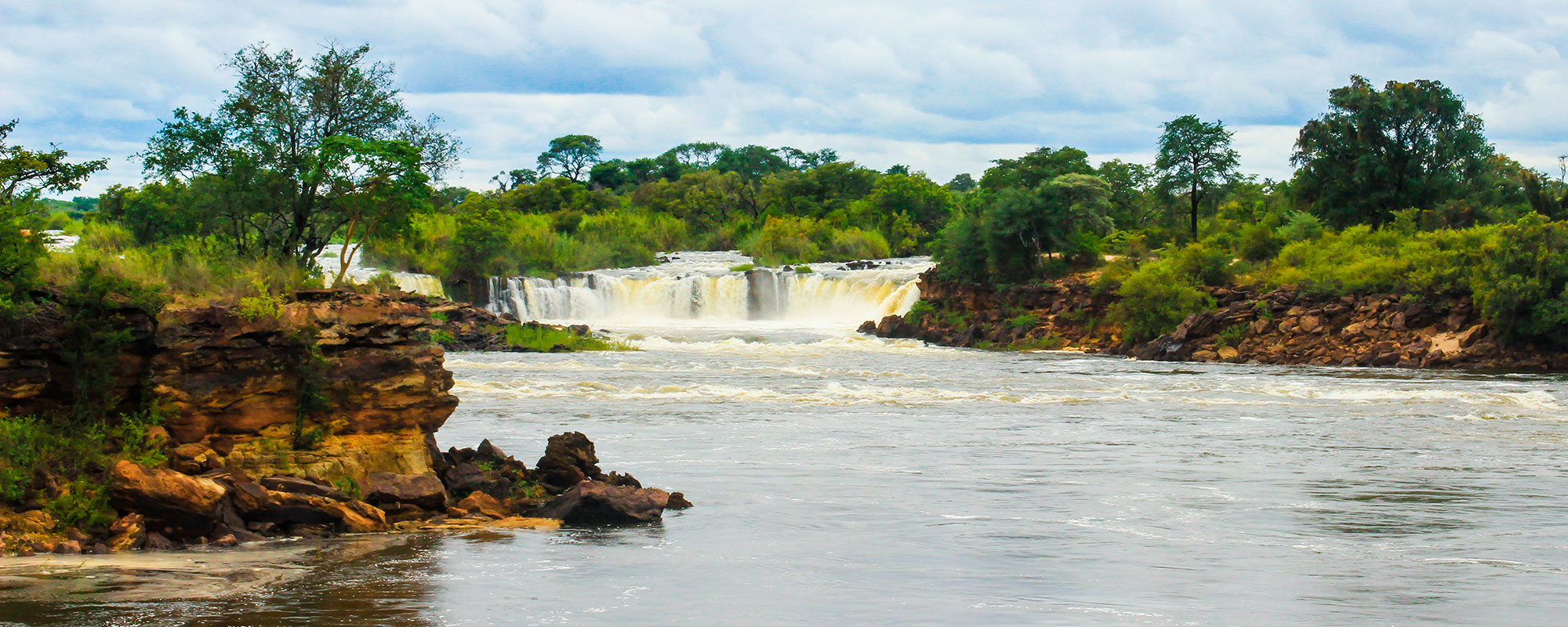
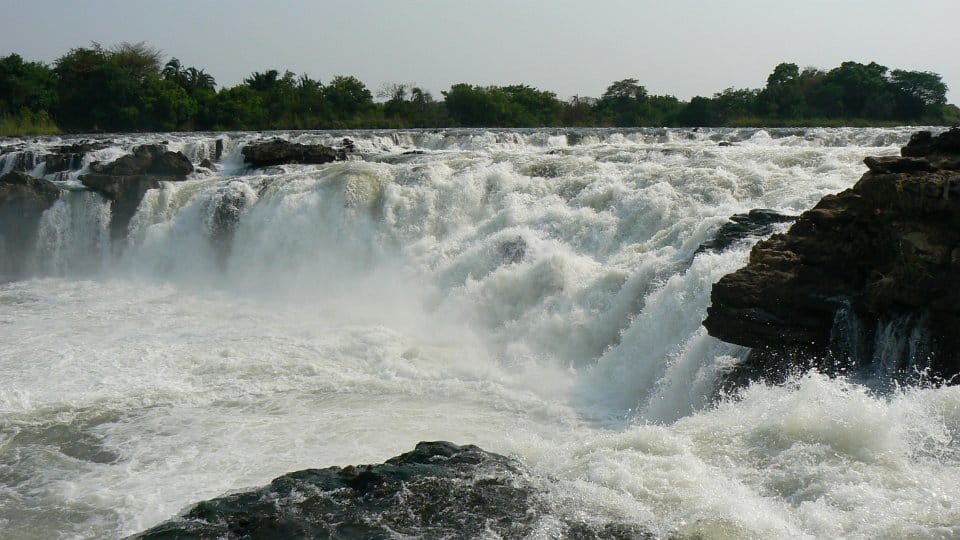
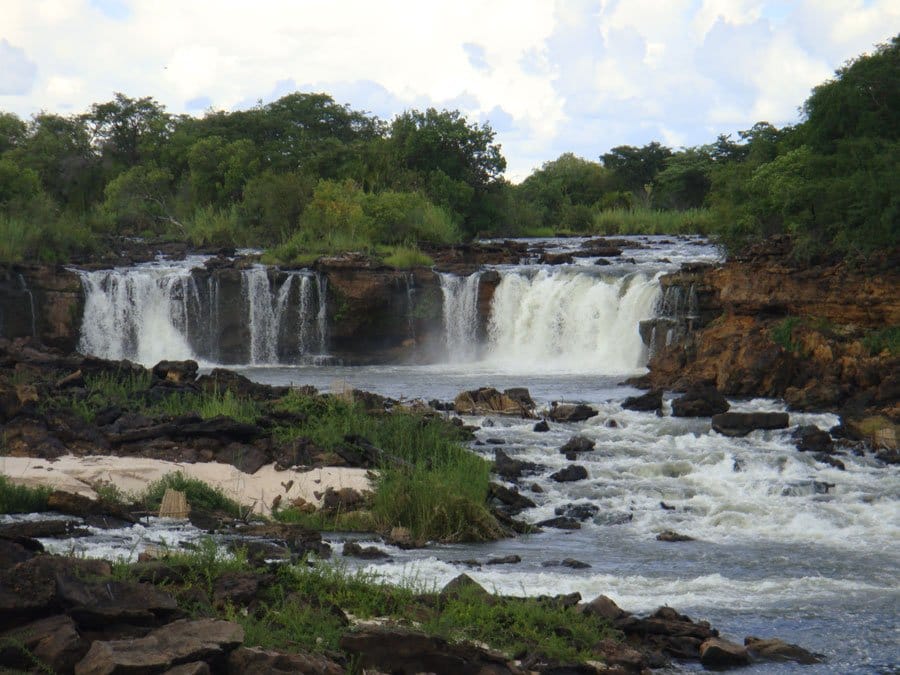
Also known as Sioma Falls because these Falls are near the village of Sioma, these beautiful falls mark the transition point of the Zambezi River’s flow from Kalahari sand floodplain to basalt dyke, the latter eventually contributing to the magnificent Batoka Gorge of the Victoria Falls.
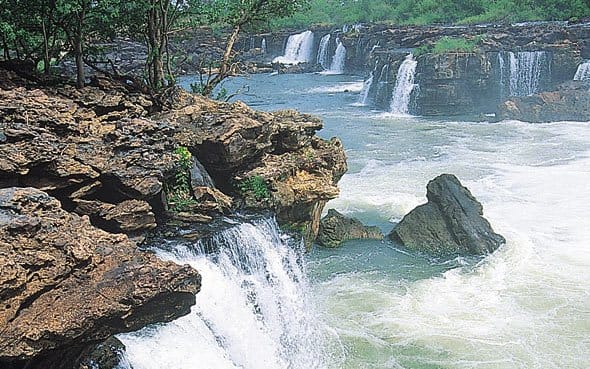
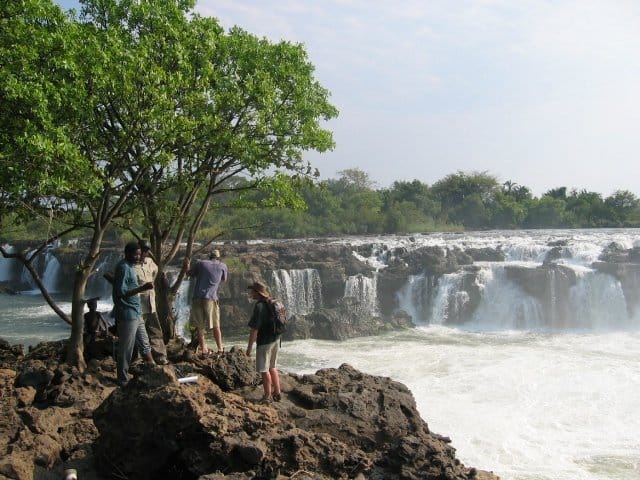
The horseshoe-shaped Ngonye Falls are impressive because of the sheer volume of water that cascades over the staggered 20m / 66ft drop. An interesting aspect is that the river flows underneath the rock on either side of the falls. It is quite remarkable to stand upon them, feeling and hearing the underground flow.
GETTING THERE
The best option is to spend the night camping at Ngonye Falls National Park or stay at a lodge that has guided excursions. There are a couple of simple camps at Senanga that also offer guided trips to the falls. Alternatively, get to the village of Sioma and ask for a guide to take you. It is best viewed by walking about two kilometres / a mile downstream of Sioma. There is usually a dugout canoe that will ferry you across the Zambezi, then a further two kilometre / one mile walk back upstream will take you to the falls’ best vantage point.
WHEN TO VISIT
The Ngonye Falls provide great photo opportunities at any time of the year but the optimum time is around June or July. Rafting is best from February to May after the rains. Wildlife is best viewed from July to November, when water is scarce and the animals are forced to come to the water holes or down to the river to drink.
FEATURED LISTINGS
Lumbe Pools
Type: Bush Camp
Area: Ngonye Falls
From: $275