|
LAKE
KARIBA

MAP
When the dam was completed in 1960 it was the
largest man-made dam ever built. Two hundred and
twenty kilometres long and in places up to forty
kilometres wide, it provides considerable
electric power to both Zambia and Zimbabwe and
supports a thriving commercial fishing industry.
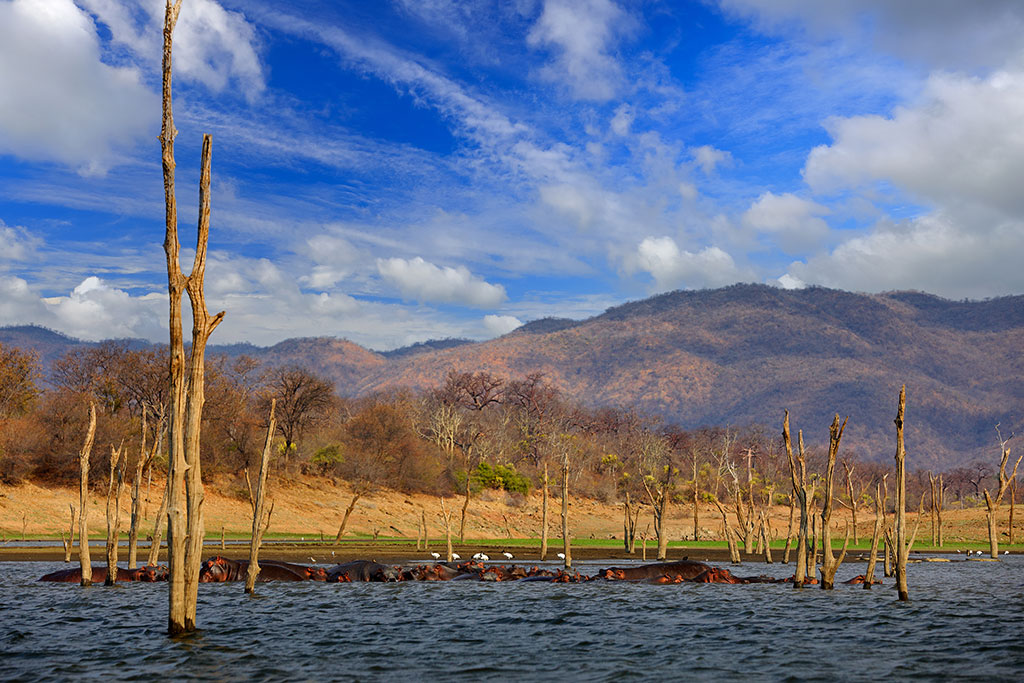
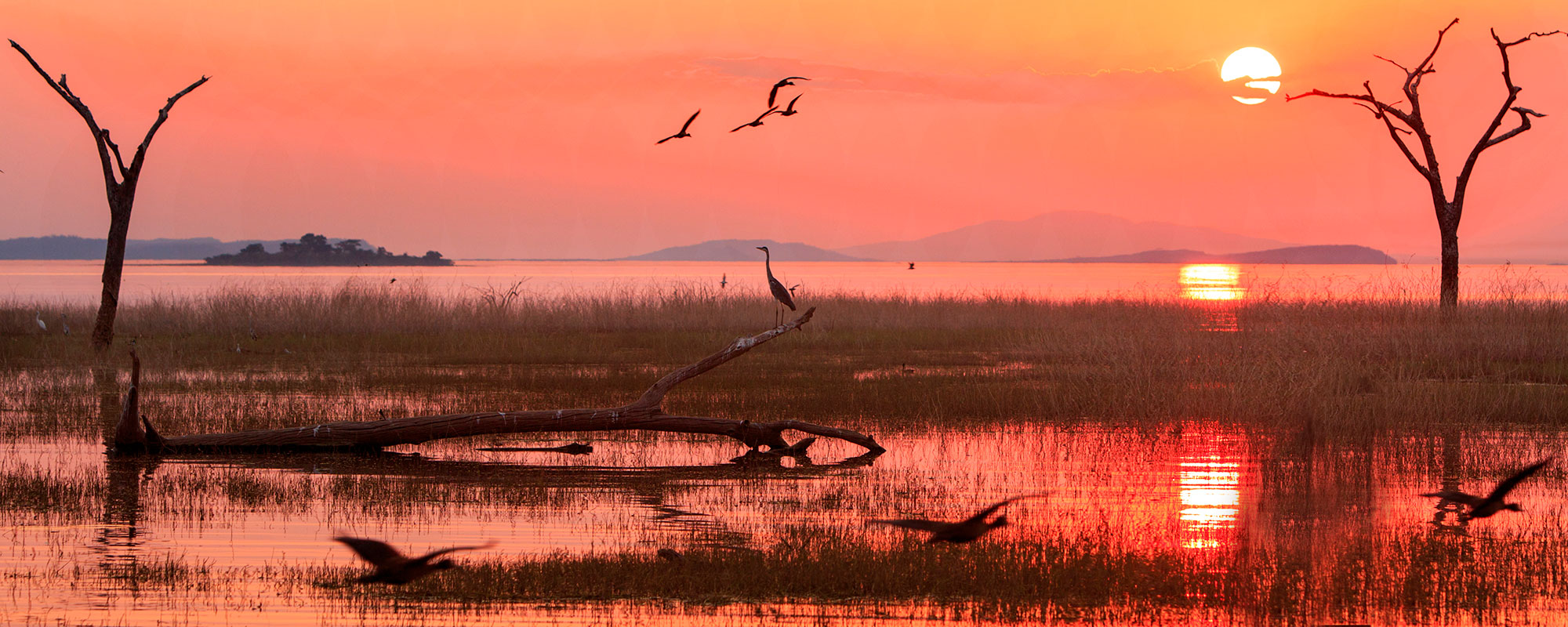
The lake’s vastness creates spectacular
panoramas as the sun casts its glow across the
shimmering waters catching the distinctive
half-submerged trees and islands.

Fishing
The conditions that had made life difficult for
animals and man also conspired to produce an instant paradise for the fish.
The rich fertilising effect of the chemicals from the strip clearance gave a
spurt to the growth of the lake fauna. The introduction to Kariba of kapenta,
tiny sardine-like fish, has proved very successful. Shoals were airlifted
from Lake Tanganyika to Lake Kariba in 1967.

Kapenta are also dried for easy
distribution as a high protein food supplement to areas where fish are
scarce. At first results were disappointing but in 1970 catches were
obtained in commercial quantities. Today, a flourishing kapenta fishing
industry has developed with a large number of rigs operating on the lake,
but as the pressure increases, tonnage will decline and licensing will have
to be carefully monitored.

The tiger fish, considered
by many to be one of the finest game fish around have flourished in the rich
waters of the lake. The largest average weight caught in competition is just
under eight pounds, but the speed, courage and strength of the tigerfish
make it a worthy opponent for the skilful angler.
When to go
All year round, but it gets very hot from
November to February. Ideal times are April/ May and September to early
October.

Getting There
From Lusaka, drive to Siavonga through the
scenic Zambezi Rift Valley, a two and a half hour drive on one of Zambia's
better roads. Take the T2 to Chirundu and turn right onto the M15, eighteen
km before the Zimbabwe border. From Harare, take the turnoff to Kariba and
cross over the dam wall to Siavonga. An airport is due to open in Siavonga
in the near future.
See Map from
Lusaka to Lake Kariba
Sightseeing
Anytime spent in the Kariba or Siavonga area
should include a visit to the Dam Wall if nothing but to witness the size of
this awesome structure. There is a display at the entrance of the bridge
describing the building of the wall and the statistics involved. The wide
bridge offers ample room for walking on either side. The contrasting views
-- the vast lake stretching to infinity on the one side and the sheer drop
to the gorge on the other side, is breathtaking.
Chirundu Fossel Forest 21 km from Chirundu,
on the road to Lusaka, lies a fossil forest with remnants of trees over 150
million years old. Sections of tree trunks up to three meters long are
exposed as a result of erosion of the surrounding soft red sandstone.
Scattered over the area are sparse Middle and late Stone Age industries,
indicating that these people sometimes made use of fossil wood for making
stone implements.

What to
do
Sport fishing in the Siavonga area is not as
good as it used to be but further down the lake shore at Sinazongwe, the
annual Tiger Fishing Competition attracts anglers from all over the
subcontinent and is held in May.
If you have your own boat, the lake is a
superb playground for all kinds of watersports. The Zambian side is not
nearly as busy as the well developed Zimbabwe side and very often yours may
be the only boat in sight. A trip on a
houseboat is highly recommended, especially at full moon. The
tranquility of watching the deep orange sun sink on the one side of the lake
and the moon rise over the shimmering waters on the other is very special.
Most hotels in the area have a range of boats for hire. Plans for a marina
are in the pipeline, but try Lake Kariba Inns lodge if you need to launch a
boat at Siavonga.
PACKAGE TOURS
offers a list of tour operators that will arrange all your travel
requirements to Lake Kariba and other Zambian destinations.
HISTORY
OF THE BUILDING OF LAKE KARIBA
WHERE
TO STAY
|