
Explore Zambia's most
            comprehensive Travel Guide


HOME

.
  HIGHLIGHTS
   Victoria Falls
   The Zambezi River
 
   Lake Kariba  
   Lake Tanganyika  
  
More...

  GAME PARKS
   South Luangwa
   North Luangwa
   Lower Zambezi
   Kafue 

   Lochinvar
   Sioma Ngwezi
   Kasanka
   More ....

 SAFARIS
    Walking Safaris
 
 Birding Safaris
   
Canoeing Safaris
 
 Mobile Safaris
   
Elephant Back Safaris
  
Horse Back Safaris
  
Photographic Safaris
 
 Open Vehicle Safaris

  ADVENTURE /SPORT
   
White Water Rafting
    Bungi Jumping
    River Boarding
  
 Tandem Kayaking
   
Abseiling
   
Gorge Swinging
   
House Boating
    Tiger and Fly
Fishing
   
Lion Walks
    Cheetah Walks
   
Elephant back Trails
    Driving around

  CITIES & TOWNS
    Lusaka
 
 Livingstone  
  
The Copperbelt  
 
 More

  DIRECTORY
    Accommodation
   
Adventures
    Embassies
    Golf Courses
   
Govt Offices
    Private Reserves
    Restaurants-Lusaka
    Safari Operators

    Transportation
    Tours
    Travel Agents
     

  TRAVEL INFO
  
Quick Facts
  
Getting There
   
Getting Around
   Handy Information
  
Visa Info  
 
  WILDLIFE

  
 Illustrated Checklists

  BIRDLIFE
  
 
In depth synopsis
   
Checklists

 PEOPLE
   History
  
Culture
  
Major Tribes
  
Ceremonies 


  ENVIRONMENT
   Geography
  
Vegetation
  
Conservation
 

  MAPS
  PHOTO GALLERIES
  VIDEOS
  TOUR & SAFARI Co's
  LINKS
  ENQUIRIES

  ADVERTISING


BANGWEULU WETLANDS

The Great Bangweulu Basin, incorporating the vast Bangweulu Lake and a massive wetland area lies in a shallow depression in the centre of an ancient cratonic platform, the North Zambian Plateau. The basin is fed by 17 principle rivers from a catchment area of 190 000 kms2 , but is drained by only one river, the Luapula.
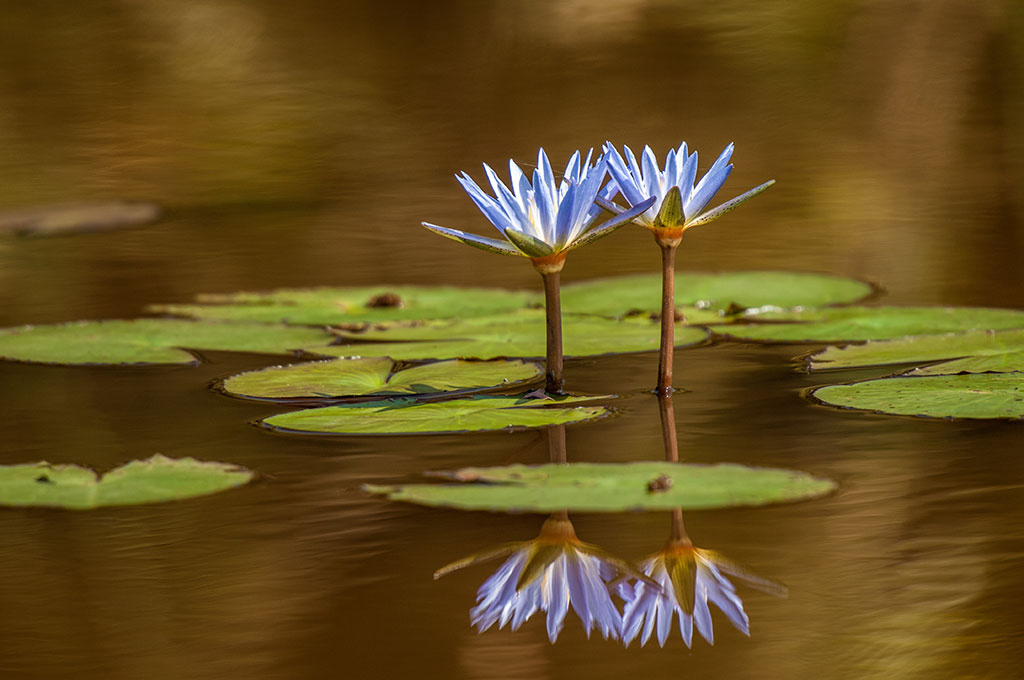
The area floods in the wet season between November in March, receiving an average annual rainfall of about 1200mm, but 90% of the water entering the system is lost to evapo-transpiration. The resultant effect is that the water level in the centre of the basin varies between one and two meters, causing the floodline to advance and retreat by as much as 45 kilometres at the periphery. It is this seasonal rising and falling of the flood waters that dictates life in the swamps.

Man has inhabited the periphery of the swamp area for hundreds of years as it has always provided a rich source of food. But the area is so incredibly vast, it is largely left to the the multitudes of wildlife that dwell of the rich resources. The current inhabitants of the Northern Province are descendants of a series of emigrations from the Congo Basin.


The earliest settlers were known as the Ba-twa or Wild Men by the more recent arrivals. Formerly they occupied the islands around the confluence of the Chambesi with the Luapula Rivers and lived by fishing and hunting from temporary shelters. Today they have become assimilated into the surrounding tribes building permanent villages, cultivating and speaking the same Bemba language.


  Conservation Partnerships in Action

In order to preserve this unique habitat and wildlife, African Parks took over the management of the area in 2008, in partnership with the local communities. They will not only protect the area from poaching and resource depletion but also encourage tourism to the area so that others can enjoy the Bangweulu Wetlands. African Parks will work with seasonal fishermen, whose livelihoods depend on the fishing in the area, and the local community to enhance and protect the area and create a model conservation partnership.

   Vegetation

The higher ground surrounding the Bangweulu is dominated by miombo woodland intersected by numerous dambos. The floodplain itself is dominated by grasslands varying in composition according to the depth and duration of annual flooding. For the most part, the swamps consist of areas of open water surrounded by permanent dense stands of Papyrus grass and Phragmites reeds which are only accessible by shallow canoe via an intricate network of narrow channels.

In contrast, the temporarily inundated floodplains, grasslands and woodlands provide for a greater range of vegetation types and as a consequence a greater diversity in the bird an animal species who inhabit these areas at various times of the year.

Numerous termite mounds are scattered over a wide area. They are such a feature of this environment that Livingstone once described the Bangweulu floodplain as "a world of water and anthills." These raised mounds act as small islands safe for any flooding and allow the survival of various tree seedlings. Over time these trees have become well established with the result that a woodland has developed and contains good examples of water berry, Syzygium cordatum, sausage tree Kigelia africana and several figs, to name but a few.


   Getting there

There are two routes from the Great North Road into Bangweulu Wetlands:

Route A: From Lusaka to Chikuni

  • 40km beyond Serenje, take the left turn to Kasanka National Park (and Samfya);
  • Go through the Kasanka boom, past the Kasanka gates on the left, and proceed 7km.
  • Take the right turn signposted Livingstone Memorial at Chalilo.
  • At the Community School bear right. Stay on this road (it becomes quite narrow) for 32km to Lake Waka Waka and the community camp, signposted to your left;
  • Continue from Lake Waka Waka for 35km to Chiundaponde and the Nakapalayo Tourism Project;
  • From Chiundaponde continue for 65km to Chikuni and Nsobe Camp, on the edge of the floodplain;
  • From Nsobe Camp continue for 10km across the floodplain, following the causeway to Chikuni, and 1km on to Shoebill Camp (during the wet season, a boat transfer should be organised from Nsobe).

Route B: From Mpika to Chikuni

  • From Mpika, continue south for 70km on the Great North Road;
  • Turn to the right onto a dirt road signposted Chiundaponde and Muwele;
  • Take this road through the Lavushi Manda National Park for 70km to Chiundaponde;
  • From Chiundaponde continue for 65km to Chikuni and Nsobe Camp, on the edge of the floodplain;
  • From Nsobe Camp continue for 10km across the floodplain, following the causeway to Chikuni, and 1km on to Shoebill Camp (during the wet season, a boat transfer should be organised from Nsobe.)

Airstrips

Access is also by small charter aircraft to an airstrip just on the edge of the swamps.  There are currently two operational airstrips in the area:

  • Chimbwi – Chikuni; 1km from Shoebill Island Camp
  • Inja – Chiundaponde; near Nkondo and Nakapalayo camps and 65km from Shoebill Camp

Landing fees of US$10 per aircraft per landing are payable.

Sky Trails  Air charters is based in the area and operates regular flights into Bangweulu.
 

   When to go

During the rains (November to March) the insects are more prolific but the birdlife is phenomenal. All trips in and around the swamps are by boat. The Chimbwe floodplain will be inundated and to attempt to drive to Shoebill Island Camp will be impossible. There is a raised causeway leading from the last village before the floodplain, Muwele, to Chikuni. A small banana boat is used to reach the Camp from Chikuni, a trip of 4 kms through tall grasses and reeds.

Depending on the extent of the rain during the summer, the floodplain dries out sufficiently to allow the passage of 4x4 vehicles by mid to late April. It is then possible to observe the black lechwe at close quarters and also to reach another raised causeway that leads to Shoebill camp.

By June/July, much of the floodplain is dry and the lechwe have moved closer towards the permanent swamp and Shoebill Camp. It also becomes possible to take walks from the camp and experience the strange sensation of walking on the floating mats of vegetation which grow on the surface of the once open water. While the number of birds around at this time of year is still extensive, the number of species drops with the departure of the summer migrants.

August is very much the middle of winter in the swamps, and although the daytime temperatures are pleasant it can be extremely cold at nights with temperature dropping to freezing.

   Where to stay

All visitors entering the area through the Chiunda Ponde entrance gate are charged USD10 per person, per day.

  • Nkondo Camp

Six en suite safari tents in a beautiful location on the Lulimala River are available on a self catering basis. All bedding and linen are provided. For rates, reservations and enquiries contact bangweulu@african-parks.org


  • Shoebill Camp

Shoebill Camp offers accommodation in safari tents under thatch rooves and reed cottages. Each has 2 beds, and an en-suite shower and flush toilet. Facilities are either self catering or fully catered. Guided boat trips to see the elusive Shoebill Stork, in either banana boats or dugouts is also available.

For rates, reservations and enquiries contact wasa@kasanka.com


    Chikuni area in the wet season

  • Makanga Camp

Makanga Camp offers accommodation in safari tents. Each has 2 beds, and an en-suite hot water shower and flush toilet. Facilities are self catering with a chef available to assist. A gas cooker, fridge and freezer are available. For rates, reservations and enquiries contact bangweulu@african-parks.org. Reservations are essential.


  • Nsobe Camp

Nsobe Camp offers basic camping sites with a central braai area and is charged at US$ 10 per person per night. No reservations are required.


  • Nakapalayo Tourism Project, Chiundaponde

Nakapalayo offers 6 basic, twin-bed brick chalets, run by the local community.  It offers a rustic experience with outdoor bucket showers and the village’s first flush toilet.  For US$ 60 per person per night, visitors can expect an evening meal with local entertainment, breakfast and a village tour. No pre booking is possible.
 

  • Lake Waka Waka Community Camp

This is a beautiful, yet simple camp site on the shores of Lake Waka Waka en route to Chiundaponde from Kasanka.It has bucket showers and braai areas.  It is maintained and managed by the local community members who prepare fires and fetch clean water from the lake.  Camping is US$ 5 per person per night and no pre bookings are possible.


   Sightseeing

One of the best reasons for coming to this unusual watery wilderness is the remarkable experience of this infinite flat expanse. The views to the horizon seem endless and one imagines one can almost see the curve of the planet. The birdlife is just magnificent and the sight of thousands upon thousands of the endemic black lechwe, unforgettable.

Vast open floodplains, several kilometres wide exist at the periphery of the permanent swamps. These may lie under a blanket of water from a few centimetres to a meter deep from 3 - 6 months a year depending on the extent of the summer rainfall. These shallow waters provide ideal feeding grounds for huge numbers of indigenous birds as well as numerous summer migrants, many who will have travelled the length of Africa to winter-over in the swamps. White and pink backed pelicans, wattled cranes, white storks saddle billed storks, spoonbills and ibises in flocks numbering in the hundreds as well as many species of the smaller waders, are a common but dramatic sight when the waters are rich in small fish, shrimps and snails.

One of the most rare and elusive birds in Africa, the shoebill, Balaeniceps rex, favours the Bangweulu swamps as one of their last remaining habitats and during the early months following the rains, this strange looking bird can regularly be seen on the fringe between the permanent swamps and the floodplains. Read more on this rare bird.

Other fairly rare birds that are reasonably abundant in the area include the swamp fly-catcher, marsh tchagra, marsh whydah and the white cheeked bee-eater. The ground hornbill and Denham’s bustard are also a common sight as they patrol the grassland for large insects.

The floodplains simply teem with birds including pratincoles, ruff by the thousand, crowned cranes, Montagu’s and Pallid Harriers. The shallow waterlines abound with ducks, geese, jacanas, spoonbills, pelicans and occasionally flamingos. Other notables are the slatey egret, black egret and goliath heron. Watch out too for the swamp fly catcher, white cheeked bee-eater and the rosy breasted longclaw.

With wetlands, grasslands and woodlands in such close proximity, a great diversity of birds can be seen in a relatively small area and to date nearly 400 species have been recorded here.

Unique to the floodplains of the Bangweulu swamps is the water loving black lechwe (Kobus lechwe smithemani), which can gather in herds of up to 10 000, following the floodwaters as they recede during the year.


Video courtesy of Will Bolton

The shy but attractive sitatunga, Tragelaphus spekei, is associated more with denser vegetation and has hooves especially adapted for walking on the thick mats of floating vegetation. These antelope are good swimmers and can spend the greater part of the day immersed in water and when disturbed, can submerge with just their nose visible.

Course grasslands are found bordering the floodplains where the land is imperceptibly higher and not subject to such extensive flooding. The Oribi, a shy and petite antelope, enjoys the long grasses and can frequently be seen in the late afternoon when small family groups stand up to feed.

The areas surrounding the termite mounds, characteristic of the swamps is an environment much favoured by the tsessebe, the world’s fastest antelope, which can be seen in herds of over a hundred strong.

Also seen in the woodlands are common duiker and reedbuck. Less frequently roan, wild dog and vervet monkeys, as well as smaller more nocturnal mammals such as mongooses and bushpigs.

Until the early 1980’s there used to be lions in the swamps that preyed on the lechwe and sitatunga. But with the increase in human activity around the edge of the swamps, they have unfortunately been eradicated.

Although rarely seen, leopards do exist while hyenas and jackals are often heard at night and occasionally encountered on night drives.

Later in the year, when the flood waters have receded, buffalo and to a lesser extent elephant move into the area to feed on the plentiful grasses. Numerous crocodile and hippo are found in the permanent water channels or lurking in the papyrus reeds.

The swamps are a protected wetland having international importance under the ramsar Convention. The area is ecologically very sensitive and great care should be taken when driving around the floodplains in the dry season. Stick to existing tracks and keep driving to a minimum.
 

Tourists visiting the Bangweulu Wetlands can also visit the following attractions on the “Northern Circuit”

  1. Kasanka National Park
  2. Lavushi Manda National Park
  3. North Luangwa National Park
  4. Shiwa Ngandu (Africa House)
  5. Mutinondo Wilderness


Click here for
a Brochure  on the
Bangweulu Wetlands

managed by


Google

VIDEOS
with short clips on
safaris, wildlife,
Victoria Falls,
adventures and more

CLICK HERE
for the Tourist Board
Video on Zambia


GALLERIES
Photo Gallery Pages
by destination,


BROCHURES

*
Destination Zambia

* Zambia Highlights

 * Tourism Investment
Opportunities in the
 Kafue National Park


TOURS & SAFARIS
Book accommodation
 or a guided tour
anywhere in Zambia


Follow us on


PACKAGE TOURS offers a list of tour operators that will arrange all your travel requirements to Lake Bangweulu and other Zambian destinations.


Click on International Travel Agents if you're looking for an agent in Europe, US or Australia booking trips to Zambia and other Southern African countries.


Bangweulu
Wetlands Project

African Parks Network
PO Box 450098
Mpika-ZAMBIA
Cell: + 260 977 193 564
Office: + 260 977 752 207
Thuraya: +8821 6510 74770
Skype: bangweulu.fom
Email:
bangweulu@african-parks.org
www.african-parks.org


Designed and hosted
by