
Explore Zambia's most
            comprehensive Travel Guide


HOME

.
  HIGHLIGHTS
   Victoria Falls
   The Zambezi River
 
   Lake Kariba  
   Lake Tanganyika  
   More...

  GAME PARKS
   South Luangwa
   North Luangwa
   Lower Zambezi
   Kafue 

   Lochinvar
   Sioma Ngwezi
   Kasanka
   More ....

 SAFARIS
    Walking Safaris
 
 Birding Safaris
   
Canoeing Safaris
 
 Mobile Safaris
   
Elephant Back Safaris
   Horse Back Safaris
  
Photographic Safaris
 
 Open Vehicle Safaris

  ADVENTURES
   
White Water Rafting
    Bungi Jumping
  
 Abseiling
   
Gorge Swinging
   
Tandem Kayaking
   
House Boating
    Tiger and Fly
Fishing
   
Lion Walks
   
Elephant back Trails
    Driving around

  CITIES & TOWNS
    Lusaka
   Livingstone  
   The Copperbelt
 
 
 More

  DIRECTORY
    Accommodation
   
Adventures
    Embassies
    Golf Courses
   
Govt Offices
    Private Reserves
    Restaurants-Lusaka
    Safari Operators

    Transportation
    Tours
    Travel Agents
     

  TRAVEL INFO
   Quick Facts

  
Getting There
   
Getting Around
   Handy Information
  
Visa Info  
 
  WILDLIFE

  
 Illustrated Checklists

  BIRDLIFE
  
In depth synopsis
   
Checklists

 PEOPLE
   History
   Culture
  
Major Tribes
  
Ceremonies 


  ENVIRONMENT
   Geography
   Vegetation
   Conservation
 

  MAPS
  PHOTO GALLERIES
  VIDEOS
  TOUR & SAFARI Co's
  LINKS
  ENQUIRIES

  ADVERTISING


THE PEOPLE OF ZAMBIA

Zambia has one of the lowest population to land ratio’s in Africa. Only 10 million people in a country half the size of Europe. The employment opportunities offered in the post independence era in the copper mines and associated industries led to a strong rural-urban migration. The result has been to make Zambia one of the most urbanised countries in Africa. About one fifth of the population lives on the Copperbelt to the north of the capital, but the biggest concentration of people is in Lusaka itself with an estimated population of over 2 million. This has resulted in massive tracts of uninhabited land across the country.

   Culture

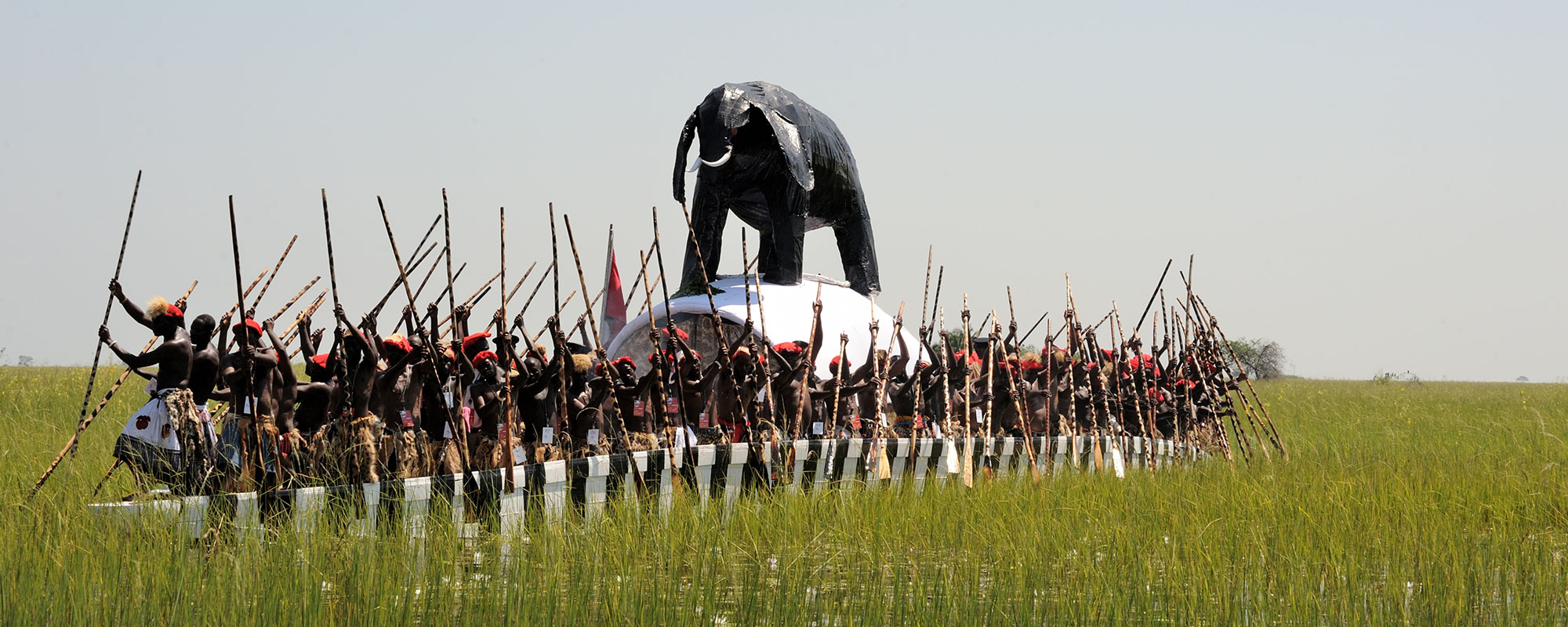
Zambia’s contemporary culture is a blend of values, norms, material and spiritual traditions of more than 70 ethnically diverse people. Most of the tribes of Zambia moved into the area in a series of migratory waves a few centuries ago. They grew in numbers and many travelled in search of establishing new kingdoms, farming land and pastures.
Before the colonial period, the region now known as Zambia was the home of a number of free states. Each having comprehensive economic links with each other and the outside world along trade routes to the east and west coast of Africa. The main exports were copper, ivory and slaves in exchange for textiles, jewellery, salt and hardware.


During the colonial period, the process of industrialisation and urbanisation saw ethnically different people brought together by economic interests. This, as well as the very definite influence of western standards, generated a new culture without conscious effort of politically determined guidelines.
Many of the rural inhabitants however, have retained their indigenous and traditional customs and values. After Independence in 1964, the government recognised the role culture was to play in the overall development of a new nation and began to explore the question of a National identity.
Institutions to protect and promote Zambia’s culture were created, including the National Heritage Conservation Commission. Private museums were also founded and cultural villages were established to promote the expression of artistic talents.
 

See

Seka Educational Theatre

Ngoni Dance Group

Insombo-Malimba


   Music and Dance

Quiet beauty, bustle, bounding life or brimming joy characterise many aspects of music and dance in Zambia. Emphasis varies from breathless acrobatic spectacle amid propulsive drumming to fine subtleties of sound and movement.

Many traditional instruments are still played throughout the country, although the desire for western instruments increases. The more common ones are the hand piano, a small instrument with iron keys mounted on a rectangular box and plucked by both thumbs. Or the silimba, a xylophone type instrument with a range of flat wooden keys mounted over gourds. The most common of course is the drum and drumming plays an important part of rituals, ceremonies, celebrations and community communication.
 

Dance is an important part of musical expression among Africans and along with the ideas they express, serve as reflectors of life and thought over the centuries - of times of turmoil and peace, tension and confidence, retreat and advance, conquest and defeat.
The influence of the west and the rest of Africa is well entrenched in music tastes of the current generation in Zambia. In the big towns, night clubs and shebeens belt the sounds of Kwela and rumba and many local bands play to the increasingly westernised youth.

   Arts & Crafts

Zambia’s diverse cultures bring with them a wide variety of traditional skills. Crafts can be found in great variety if not in abundance and among them is some of the finest basketry in Africa.
The economy of most of the crafts people is based on fishing, cattle or the cultivation of crops. Craftwork is often done seasonally to supplement the incomes of many families. It was originally intended for barter and made according to the needs of other villagers. To many, especially the subsistence farmers, craftwork is their only means of earning cash.

Traditionally made pots and baskets in the more populated areas however, are being replaced by commercially manufactured utility items made of plastic or tin. A large part of the new generation are losing these traditional skills because of a lessening demand and others have begun to make more modern items like lampshades, shopping and laundry baskets and furniture.

Fortunately there are organisations such as Zintu Handicrafts in Lusaka, the Nayuma Museum in Mongu, the Tonga Museum in Choma and the Moto Moto Museum in Mbala, which aim to stimulate the production of quality craftwork both in traditional forms and where craftwork is a contemporary expression of art.

Basketry, practised by both the men and the women is widespread. The many forms and raw materials used reflect the environment in which they are made: bamboo, liana vines, roots, reeds, grasses, rushes, papyrus palm leaves, bark and sisal. They are decorated with symbolic designs using traditional dyes made from different coloured soils, roots, bark and leaves. The variety of uses for basketry is wide; carrying and storage, fishing traps, beer strainers, flour sieves, sleeping and eating mats and a variety of tableware. The Lozi and Mbunda people in the Western Province are particularly skilled in this field.
It is the men that usually do the woodwork and carving and produce canoes, furniture, walking sticks, utensils and food bowls as well as masks, drums and a variety of animal forms. The potters are usually, though not always women who work the clay and then fire them on open fires or pits.

For a look at a local artists pictures visit Enock Ilunga's web site.


   Urban Life

The principle urban centres, Lusaka, Livingstone and the towns on the Copperbelt are where most of the rural people head when they make the decision to leave their villages. The transition may not be an easy one, especially as the motivation is to find work and very often they are disappointed. The impact on the cities has been immense. A ring of shanty towns around the peripheries, with no electricity or adequate sanitation increases both disease and crime. But the shanties are filled with a people who have made a fine art out of surviving with very little. Home industries spring up everywhere from tailors, cobblers, vegetable sellers, money exchangers, to hundreds of walking salesmen selling anything from frying pans, electric plugs and batteries to fruit, vegetables and nuts. The unemployment figure is currently about 60%.

But despite the dirt and discomfort of the city, the allure is still powerful. The countryside may be healthier, more open and free, but to many of the rural young, it is monotonous compared with the action and energy of the big city. The massive markets that have developed are a world within a world in the cities. Thousands of little wooden stalls crammed together selling a wide variety of goods in an endless shanty shopping mall. The mood in the markets is very lively, serving as a social meeting place as well.

The impact on rural villages will have long term detrimental effects as it is mostly young men under 25 that leave, leaving the women folk to raise children, tend to the fields and eke out a living by themselves, since little money is made in the cities so little is ever sent back. Fewer traditional farmers are making a living by agriculture and crop output for the nation is reducing as a consequence.

Zambia faces an enormous challenge to cope with this trend, not only to lure people back to the country to cultivate the land, but to ensure the people who won’t leave the cities, are gainfully employed.

There is also a burgeoning well educated middle and wealthy class, white collar workers and entrepreneurs. Many women are in management positions or  have their own companies and several are in government.

  Rural Life

Africa’s economy, before Europeans arrived was essentially a rural one. Fishing, hunting and agriculture were the means of survival and because numbers were small, these activities were viable. With the increase in community sizes and the lure of the cities, rural life has undergone fundamental changes. Most villages are dominated by women who now have to depend on their own ingenuity to generate cash to support their many children and very often their elders.

Adulthood comes at an early age to rural children, especially the girls. Few manage to start school before ten and only five years later they are considered adults with all the attendant responsibilities of marriage, child rearing and tending to crops. Only a small percentage of children finish primary school due to the high cost of uniforms, books and various school funds which parents must contribute. Usually a woman will have between 6 and 12 children and the cost of schooling for all of them is usually out of their reach. The desire to have many children still remains, even with the attendant hardships. The idea of long term insurance overwhelms the sacrifices.

Traditional healers play an important role in health care and almost every village will have a knowledgeable person who takes care of the ill with herbal and plant remedies.

Different tribes have differing village styles, some build their houses from mud and thatch, others burn bricks and build square houses which they paint with individual patterns. Usually long distances must be walked to fetch water and wood for fuel.

But although life is hard in these remote villages, they are by no means unhappy. Pleasure is taken in simple things and problems are shared. Daily chores are done in groups and often become social occasions. Everyone contributes to weddings and funerals otherwise they would not be affordable. There are no invitations and anybody in the village is welcome to join in.

   Customs

Many of the tribal customs are only still practised in the rural areas as the urbanised youth aspire to Western behaviour.

A greeting is always exchanged before any conversation. If a person approaches you, you should always offer the first greeting. A man should withhold his hand in greeting until the woman offers hers. Gifts are often offered to a visitor as a sign of honour, friendship or gratitude. One should never refuse a gift and accept it with both hands at the same time expressing thanks.

‘Lobola’ the bride price is still widely practised and is a token of appreciation to the parents of the girl. In most tribes, the bride is taken to the man’s village the evening before the wedding. Large quantities of food are prepared and home made beer is brewed to celebrate the marriage. The whole village attends and much singing dancing and drumming takes place, usually over two or three days. Afterwards, the elders council the bride and groom on the preservation of marriage. The bride is not supposed to cook until after the in-laws introduce her to the pots and fire.

Funerals are also big occasions in the villages. Everyone clubs together to help pay the expenses. Grief is shown through wailing singing and dancing and becomes quite an emotional affair. During the mourning period women and men separate, the men staying outside and the women in the house of the deceased. After long speeches about the departed friend and thanks for the donations, the whole village walks to the place of burial to pay their last respects.

   Health and Education

The government has a policy of universal free primary education and health care. Health facilities however are grossly inadequate with only half the required doctors needed to service the population.

Some 95% of primary school age children are enrolled at schools with 20% continuing to secondary level and 2% of the 20 - 24 age group in tertiary level. Illiteracy is only 27% but the drop out rate at schools is very high. In rural areas, the standard of education is hampered by lack of facilities, transport and teachers.  


ZAMBIAN
DANCE/THEATRE GROUPS


Google

VIDEOS
with short clips on
safaris, wildlife,
Victoria Falls,
adventures and more

CLICK HERE
for the Tourist Board
Video on Zambia


GALLERIES
Photo Gallery Pages
by destination,


BROCHURES

*
Destination Zambia

* Zambia Highlights

 * Tourism Investment
Opportunities in the
 Kafue National Park


TOURS & SAFARIS
Book accommodation
 or a guided tour
anywhere in Zambia


Follow us on


Visit Tribal Textiles
 

Tribal Textiles, based in the
 Luangwa Valley, produce
unique individually designed
and hand-painted textiles,
reflecting the strength of
traditional and contemporary
 African art and design. 
Their team of 150 artists create a vibrant collection of home
 furnishings and accessories on
 100% Zambian cotton. 
The collection consists of
cushion covers, bedcovers,
table linen, wallhangings 
and an extensive range 
of personal accessories and
bags.   
 

Teach Zambia a nonprofit organization geared towards raising money for a rural school in Mazabuka, Zambia


Support Kasisi Orphanage - Lusaka


Support Lubasi Orphanage - Livingstone


Designed and hosted
by


Visit Tribal Textiles
 

Tribal Textiles, based in the
 Luangwa Valley, produce
unique individually designed
and hand-painted textiles,
reflecting the strength of
traditional and contemporary
 African art and design. 
Their team of 150 artists create a vibrant collection of home
 furnishings and accessories on
 100% Zambian cotton. 
The collection consists of
cushion covers, bedcovers,
table linen, wallhangings 
and an extensive range 
of personal accessories and
bags.   
 

Teach Zambia a nonprofit organization geared towards raising money for a rural school in Mazabuka, Zambia


Support Kasisi Orphanage - Lusaka


Support Lubasi Orphanage - Livingstone


Designed and hosted
by


Contact Webmaster                     Contact Zambia Tourism Board                            © AFRICA INSITES               See  copyright


>