
Explore Zambia's most
            comprehensive Travel Guide


HOME

.
  HIGHLIGHTS
   Victoria Falls
   The Zambezi River
 
   Lake Kariba  
   Lake Tanganyika  
  
More...

  GAME PARKS
   South Luangwa
   North Luangwa
   Lower Zambezi
   Kafue 

   Lochinvar
   Sioma Ngwezi
   Kasanka
   More ....

 SAFARIS
    Walking Safaris
 
 Birding Safaris
   
Canoeing Safaris
 
 Mobile Safaris
   
Elephant Back Safaris
  
Horse Back Safaris
  
Photographic Safaris
 
 Open Vehicle Safaris

  ADVENTURE /SPORT
   
White Water Rafting
    Bungi Jumping
    River Boarding
  
 Tandem Kayaking
   
Abseiling
   
Gorge Swinging
   
House Boating
    Tiger and Fly
Fishing
   
Lion Walks
    Cheetah Walks
   
Elephant back Trails
    Driving around

  CITIES & TOWNS
    Lusaka
 
 Livingstone  
  
The Copperbelt  
 
 More

  DIRECTORY
    Accommodation
   
Adventures
    Embassies
    Golf Courses
   
Govt Offices
    Private Reserves
    Restaurants-Lusaka
    Safari Operators

    Transportation
    Tours
    Travel Agents
     

  TRAVEL INFO
  
Quick Facts
  
Getting There
   
Getting Around
   Handy Information
  
Visa Info  
 
  WILDLIFE

  
 Illustrated Checklists

  BIRDLIFE
  
 
In depth synopsis
   
Checklists

 PEOPLE
   History
  
Culture
  
Major Tribes
  
Ceremonies 


  ENVIRONMENT
   Geography
  
Vegetation
  
Conservation
 

  MAPS
  PHOTO GALLERIES
  VIDEOS
  TOUR & SAFARI Co's
  LINKS
  ENQUIRIES

  ADVERTISING


       THE COPPERBELT

   History

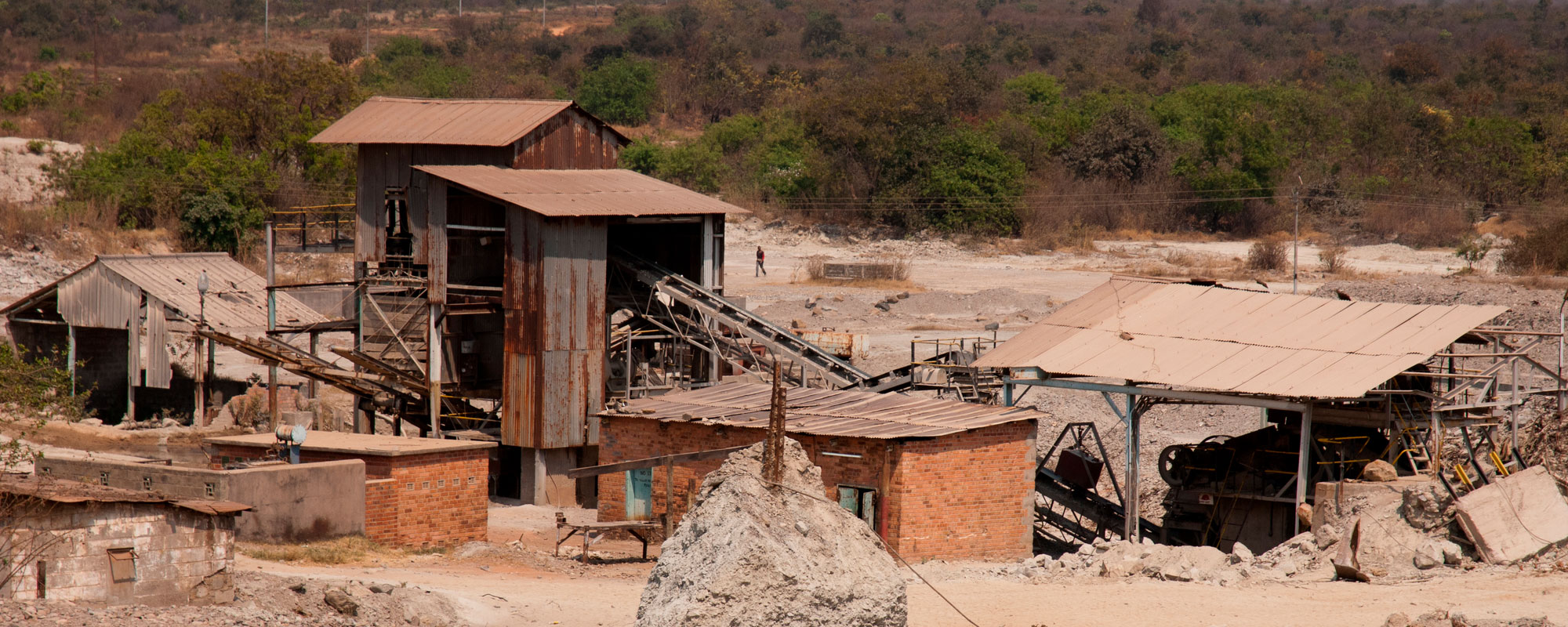
Early European prospectors were shocked at the extent of tribal diggings found on the Copperbelt and the Katanga pedicle. Even before the Lunda and Mwata Kazembe Empires of last century, copper was in circulation in the form of ingots or crosses. Used as currency in central African trade it was somewhat eclipsed in value with the increase in slave trade. In keeping with the attitudes of the time, many prospectors refused to believe that the local tribes people were in fact responsible for the digging.

The early European discoveries by prospectors like William Collier (reputed to have made his discovery on the site where he had shot a roan antelope) in 1902, had to await economic viability before any serious mining attempts were undertaken. It was only in the 1920’s that a technical breakthrough was achieved that made the mining of the then Northern Rhodesia’s ‘red gold’ highly profitable. And the fortunes of the country were irrevocably changed.


OLD PHOTOGRAPH OF KITWE FROM THE 1950'S WHEN ZAMBIA WAS STILL NORTHERN RHODESIA

The claims that made up the Copperbelt were divided between two conglomerates - the Anglo American Corporation of South Africa and the U.K. Selection Trust. (Later the Roan Selection Trust - RST) An initial boom in the industry was affected by the Great Depression of the 1930’s. International gearing up for the hostilities that resulted in World War 2 created the next boom which lasted until the early seventies. This broad outline does not even begin to illustrate the enormous impact that copper has had on the country which is Zambia today.

It was copper that motivated infrastructural development in a country low on the priority list in the Colonial repertoire. It was copper that shaped colonial policies towards a federation with the then Southern Rhodesia (Zimbabwe) and Nyasaland (Malawi). It was copper that created the social realities that fomented trade unions and the birth of Zambian Nationalism. Zambia was born with a ‘copper spoon in its mouth’. A newly independent Zambia based political and socio-economic policies and strategies on the fortunes of copper.

With the collapse of copper prices, Zambia has become a nation foundering, struggling to find a replacement for foreign exchange earnings. Copper, once the country’s saving grace, has become its albatross.
 

      Getting there

Proflighthas scheduled daily flights from Lusaka to  Ndola and Solwezi

By road, the Copperbelt is easily reached from Lusaka. Take the Great North Road to Kabwe, Kapiri Mposhi, then Ndola.


     NDOLA                                                                  Map of Ndola

An important commercial centre in Zambia, Ndola lies some 320 kilometers north of Lusaka. It is the gateway to the mineral producing region of the country. Like Lusaka, the development of Ndola has been rapid and extensive.

There are many manufacturing industries here, including a major copper refinery. Although copper is still Zambia’s largest foreign exchange earner and the mainstay of the national economy, the city of Ndola has established itself as a commercial and light industrial centre of considerable importance, as well as being the junction and distribution centre for the Copperbelt complex. The oil pipeline from Dar-es-Salaam in Tanzania ends its 1700 km journey at the Ndola refinery.

Modern factories, offices and shops line the Central Business District A big attraction in Ndola is the annual Zambia International Trade Fair  in July. A number of newspapers and journals are printed in the city, two of which serve the country - the Times of Zambia and the Sunday Times.

        Where to stay

The first choice for business visitors are the Mukuba Hotel and the New Savoy. The New Savoy is in the Town Centre and the Makuba is alongside the Showgrounds near the airport. Naaznina Hotel and Chikumbi Motel are other cheaper options.

        Sightseeing

The Copperbelt museum at Buteko avenue NdolaNdola is not big on sightseeing options. If you do have time to kill in the city, try the Copperbelt Museum in Buteko Ave, diagonally opposite the New Savoy Hotel. It has many interesting samples of the minerals found here as well as cultural arts and crafts. It is unfortunate that the exhibits are squashed into a small shop, but it’s still worth a visit if you are interested in the process of copper mining. It also sells local curios and copper items.

Lake Chilengwa,
lying about sixteen kilometres southeast of Ndola is one of two sunken lakes found on the Copperbelt.

The other being the 100 meter deep Lake Kashiba, Further south on the Kapiri Mposhi road. Both lakes have local cultural significance. The lakes are formed by the collapse of surface rock into the underlying limestone. Lake Kashiba offers basic camping facilities, safe swimming and good birdwatching.

Lake Chilengwa right on the Zairean border is considered to be a security risk. Armed policemen found at the roadblock at Chiwala school will accompany any visitors to the lake.

The Dag Hammerskjold Memorial ten kilometres along the Ndola/Kitwe road commemorates the sight where the United Nations Secretary General died in a plane crash during the Katanga crisis in Zaire in 1961. Again, due to proximity to Zaire, caution must be exercised when visiting the memorial.


   KITWE                                                             Map of Kitwe

Sixty four kilometres west of Ndola is Kitwe, the hub of the Copperbelt and the principle industrial and commercial centre of the area. The city owes its existence to the copper mining industry but a considerable number of secondary industries have been established. Planned on modern lines, Kitwe has a large shopping area with hotels, a cinema and theatre.

With the upsurge of copper prices in the 1950’s Kitwe developed from a small township to the second largest city in Zambia, obtaining city status in 1966. It then developed as an industrial and commercial area and later an important agricultural area. The good central position of the city in the Copperbelt area made it the most popular choice for industrial developers. Other industries include furniture manufacturing, batteries, clothing, asbestos and cement production, consumer goods manufacturing among others. Kitwe also has three well equipped hospitals.


Where to stay

The Edinburgh Hotel in Obote Ave is fairly old but clean and comfortable and has two restaurants, a casino and conference facilities.

Another cheaper option with corresponding standards is the Buchi Hotel on Independence Ave.

Moba Hotel & Convention Centre is the largest convention hotel in Copperbelt Province

Kitwe has a number of Guest Houses that provide a good alternative to hotel accommodation:

Eagle Guest HouseHomely, reasonably priced, private accommodation, B&B or Dinner B&B, self contained single & double rooms, budget twin & single rooms. residents bar, swimming pool. satellite TV and phone in all rooms. Good food.


Mukwa Guest House is situated just two minutes drive from the centre of Kitwe and 45 minutes from Ndola International Airport. It offers boutique style luxury accommodation and fully licensed restaurant for visitors or business executive.

Shamba Lodge - A new luxury executive Guest House, centrally located with pool, airconditioning, wifi and a good restaurant. Well appointed rooms with own verandah.


Other are Blue Gates Guest House , The House of Jasmin, Town House Lodge and Sherbourne Farm Lodge.


Sightseeing

Kitwe is largely undeveloped as a tourist town, due to the focus on mining and industry, but nonetheless is blessed with beautiful scenery and has two big rivers within its boundaries.
Mindolo dam
, about seven kilometres to the Southwest of the city centre along Kalulushi rd, has a boating club, swimming pool and bar.
If you travel down Obote Ave, you’ll find the market place where there is a fairly large curio stall selling a wide variety of copper items and other Zambian arts and crafts.
Definitely worth a visit if you’re passing through. Makwera Falls and Lake is about 9 kilometres off the Kitwe-Ndola dual carriageway. The lake is a centre for fish farming. The falls are small but quite picturesque as they tumble from a small river over a wider rocky outcrop before settling in a shimmering pool on the rock basement. If one has an interest in mining it is possible to visit the mines and take a tour down one of the shafts. Enquire at the ZCCM head office. 

eurobeeeater.jpg (10646 bytes)Thirty kilometres from Kitwe on the Kalalushi/Kasempa Road is a very charming Bird Sanctuary run by the Wildlife Society. Thick woodlands surround a small lake and there are shady campsites at the waters edge. There are communal ablutions, lots of trees, plenty of firewood and well water. One can walk or drive around the lake and into the surrounding woodlands. Boats can be hired for fishing or birdwatching from the lake.

Getting there: Take the Kalalushi road from Kitwe. Just before the ‘Welcome to Kalalushi’ sign turn left towards Southdowns airport and travel for nineteen kilometres. On the right is a rather worn out sign to Chembe.


   CHINGOLA


Chingola is the most picturesque of the Copperbelt towns with a profusion of trees and flowers. The higher rainfall that this part of the country gets is very evident in the greenery throughout the suburbs. Chingola is home to the biggest open-cast mine in Africa.

Where to stay:

The Hibiscus Guesthouse
An ideal stopover for those travelling to Solwezi and Lumwana Mines. Set in a peaceful and tranquil garden, Hibiscus Guesthouse offers comfortable, clean, safe and private accommodation as well as self catering cottages.
 

There are also three hotels with basic facilities but all are clean and comfortable, catering mainly for businessmen. Lima Hotel, Nchanga Hotel and Musunshya Hotel. (See listings for hotels)

Protea Hotels have just opened a prestigious new 40 room hotel in Chingola located in a residential area with a good restaurant and a lively bar. It has a swimming pool, internet cafe, shops and an ATM machine and all rooms are airconditioned. An excellent choice for wedding parties, banqueting and conference facilities.  The Hotel is only 1 km from the Championship Golf Course, Nchanga and an easy drive to the other excellent Copperbelt Golf courses - Mufulira, Konkola and Chubuluma. Protea also has a Safari Lodge just outside Lusaka.

Sightseeing: It is possible to visit the open cast mine. One needs to get a permit from the mine office at the end of Fern Ave. If you’re a golfing enthusiast, it said that Nchanga Golf course in Chingola is one of the most beautiful and well kept courses in Africa. A must if you're this far north is a visit to Chimfunshi Chimpanzee Sanctuary.


     LUANSHYA

Luanshya, to the left of Ndola is the site of the oldest copper mine in Zambia. There is little of interest to the tourist here but it makes for a good stopover on the way to the copperbelt or alternatively a relaxing weekend away can be had at Lowden Lodge or Baluba River Motel or Cholwa Guesthouse There are a fair number of shops, a market, clinics and petrol.  The collier monument here commemorates the site where William Collier discovered copper while hunting a roan antelope in 1902.


   MUFULIRA

If in Mufulira for business, there are three hotels with basic facilities and a Motel. Mufulira Hotel, Kamuchanga Hotel, La Samu and Masiye Motel all easy enough to find from the centre of town.


 MAP


MAPS


Google

VIDEOS
with short clips on
safaris, wildlife,
Victoria Falls,
adventures and more

CLICK HERE
for the Tourist Board
Video on Zambia


GALLERIES
Photo Gallery Pages
by destination,


BROCHURES

*
Destination Zambia

* Zambia Highlights

 * Tourism Investment
Opportunities in the
 Kafue National Park


TOURS & SAFARIS
Book accommodation
 or a guided tour
anywhere in Zambia


Follow us on


www.kitweonline.com
 
has more info


Designed and hosted
by
